
Search
Search Results

Image
Portrait of Queen Hatshepsut
A stone statue of Queen Hatshepsut of Egypt (reigned 1479–1458 BC, 18th Dynasty).

Image
Hatshepsut (Artist's Impression)
Egyptian Pharaoh Hatshepsut (1479-1458 BCE) depicted in the game Old World.
Image
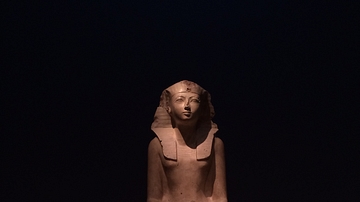
Seated Statue of Maatkare Hatshepsut
This statue of the female pharaoh Hatshepsut is a prime example of the female king's penchant for blending male and female attributes in her artwork. It depicts the pharaoh bare chested in a kilt, yet with female facial features and breasts...
Image
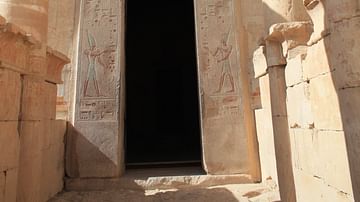
Tomb of Hatshepsut
Tomb of Hatshepsut (1479-1458 BCE), Valley of the Kings, KV60.
Image
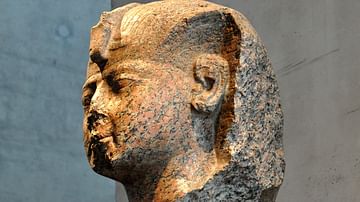
Head of Hatshepsut
Rose granite head of the statue of queen Hatshepsut. She wears the royal headdress and was depicted as a pharaoh. From modern-day Egypt. New Kingdom, 18th Dynasty, circa 1460 BCE. (State Museum of Egyptian Art, Munich, Germany).
Image
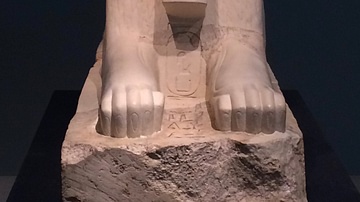
Sphinx of Maatkare Hatshepsut
This limestone and plaster piece depicts the female pharaoh Maatkare Hatshepsut as a sphinx. She has the body and mane of a lion, with the head of a human. Carved between the paws of the statue is a cartouche enclosing the pharaoh's throne...
Image
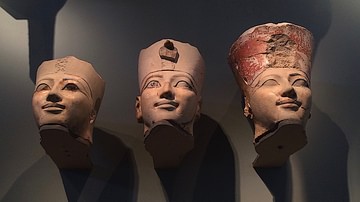
Osiride Heads of Hatshepsut
This image shows three painted heads of the female pharaoh Maatkare Hatshepsut, each originally part of a full-body osiride statue. Here, the female pharaoh appears as the god Osiris (presumably in mummified form), with her orange skin tone...

Definition
Egyptian Empire
The Egyptian Empire rose during the period of the New Kingdom (c. 1570- c. 1069 BCE), when the country reached its height of wealth, international prestige, and military might. The empire stretched from modern-day Syria in the north to modern-day...

Article
Jesus & the Law of Moses
New Testament studies now place Jesus Christ within the parameters of Second Temple Judaism in the 1st century CE, attempting to go behind the layers of later Christian theology and philosophy (such as the trinity) to understand how his message...

Video
Hatshepsut - The Queen Who Would Be King
Hatshepsut ruled in her husband's stead for seven years after his death. When her son, Thuthmose III, came of age, Hatshepsut refused to step aside. Until modern discoveries were made, both her son and patriarchal society successfully conspired...
