
Search
Search Results

Image
Temple of Hatshepsut, Aerial View
The Temple of Queen Hatshepsut of Egypt at Deir al-Bahri, Thebes, Egypt

Article
The Temple in Jerusalem
According to Jewish tradition, the original Jerusalem Temple was ordained by Yahweh/God, as described in 2 Samuel 7:12, where Yahweh commands Nathan to tell David: When your days are fulfilled and you lie down with your ancestors, I will...

Article
Temple of Athena Nike
The Temple of Athena Nike, on the southwest bastion of the Acropolis, is smaller than the other buildings behind it but no less impressive. It was completed in 420 BCE during the restoration of Athens after the Persian invasion of 480 BCE...

Image
Hatshepsut
Detail of Hatshepsut, Eighteenth dynasty of Egypt, c. 1473-1458 B.C. Indurated limestone sculpture at the Metropolitan Museum of Art, New York City. Hatshepsut is depicted in the clothing of a male king though with a feminine form. Inscriptions...
Image
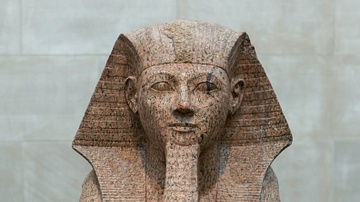
Sphinx of Hatshepsut
Sphinx of Hatshepsut (ca. 1479–1458 BCE). This colossal sphinx portrays the female pharaoh Hatshepsut with the body of a lion and a human head wearing a nemes–headcloth and false beard. The sculptor has carefully observed the powerful muscles...

Definition
God's Wife of Amun
The position of God's Wife of Amun was one of the most politically powerful and spiritually significant in later Egyptian history. Elevated from a figurehead in the New Kingdom (c.1570-1069 BCE), the God's Wife of Amun would hold power equal...

Definition
Temple at Uppsala
The Temple at Uppsala was a religious center dedicated to the Norse gods Thor, Odin, and Freyr located in what is now Gamla Uppsala in Sweden. It is described by the 11th-century historian Adam of Bremen as the most significant pagan site...

Image
Hatshepsut (Artistic Facial Reconstruction)
The re-created face of Hatshepsut, the Egyptian pharaoh who reigned from approximately 1479 to 1458 BCE. She is widely regarded as one of the most successful pharaohs in ancient Egyptian history and is notable for being one of the few women...
Image
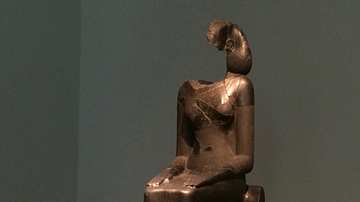
Diorite Statue of Hatshepsut
This black diorite statue of Maatkare Hatshepsut is a unique example of the king's personal artistic style. Most likely dating from the early years of her kingship, Hatshepsut is portrayed as fully-female, with breasts and delicate facial...

Video
The History of Egypt (Part 2): Hatshepsut's Funerary Temple
Hatshepsut starts a program of aggressive trade with the outside world. She commissions her architect, Senenmut, to build an impressive funerary temple on the side of a mountain. After her death, her heir, Thutmose III tries to erase her...
