
Search
Remove Ads
Advertisement
Search Results

Image Gallery
Artistic Expression in Ancient China
Art in the ancient world was initially associated with ceremonial ritual but, in time, began featuring subjects related to everyday life. The Chinese were among the first civilizations to create a narrative of their culture and mythology...

Definition
The Great Sphinx of Giza
The Great Sphinx of Giza is the most instantly recognizable statue associated with ancient Egypt and among the most famous in the world. The sculpture, of a recumbent lion with the head of an Egyptian king, was carved out of limestone on...
Definition
Gwanggaeto the Great
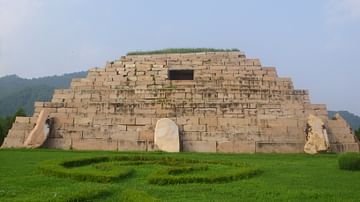
Gwanggaeto (Kwanggaeto), often referred to as Gwanggaeto the Great, was king of the Goguryeo (Koguryo) kingdom which ruled northern Korea during the Three Kingdoms period. Gwanggaeto reigned between 391 and 413 CE, and living up to his other...

Definition
Chinese Literature
Chinese literature is among the most imaginative and interesting in the world. The precision of the language results in perfectly realized images whether in poetry or prose and, as with all great literature, the themes are timeless. The Chinese...

Definition
Great Exhibition
The 1851 Great Exhibition was held in the purpose-built Crystal Palace in Hyde Park, London, to showcase the latest developments in engineering, science, and the arts, as well as objects of cultural significance from Britain and abroad. Running...
Definition
The Edicts of Ashoka the Great
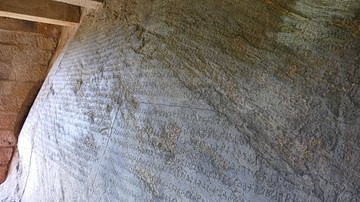
The Edicts of Ashoka are 33 inscriptions engraved on pillars, large stones, and cave walls by Ashoka the Great (r. 268-232 BCE), the third king of the Mauryan Empire (322-185 BCE) of India. One set, the so-called Major Rock Edicts, are consistent...

Image
Wall Block Inscribed with the Name of Alexander the Great
Marble wall block from the temple of Athena Polias at Priene, inscribed with the name of Alexander the Great, c. 334-330 BCE. The British Museum, London. Around 340 BCE, the inhabitants of Priene were laying out their new city, terraced...

Definition
Emperor Taizu of Song
Emperor Taizu (960-976 CE), formerly known as Zhao Kuangyin, was the founder of the Song (aka Sung) dynasty which ruled China from 960 to 1279 CE. Taizu settled for a territorially smaller but more unified and prosperous China than was seen...

Article
Diodorus Siculus' Account of the Life of Semiramis
Semiramis is the semi-divine Warrior-Queen of Assyria, whose reign is most clearly documented by the Greek historian Diodorus Siculus (l. 90-30 BCE) in his great work Bibliotheca Historica ("Historical Library") written over thirty years...

Definition
Genghis Khan
Genghis Khan (aka Chinggis Khan) was the founder of the Mongol Empire which he ruled from 1206 until his death in 1227. Born Temujin, he acquired the title of Genghis Khan, likely meaning 'universal ruler’, after unifying the Mongol tribes...
