
Search
Remove Ads
Advertisement
Search Results
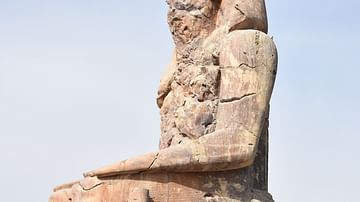
Image
Colossus of Memnon (Side View)
One of the Colossi of Memnon representing Amenhotep III, 18th Dynasty, 14th century BCE. Luxor, Egypt.
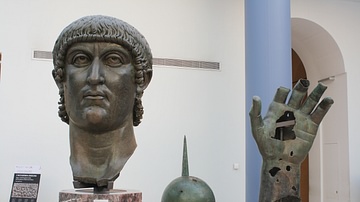
Image
Constantine I Colossus
The head, hand and sphere (symbol of power) from the colossal bronze statue of Constantine I, 4th century CE. The head alone is 1.77 m high. (Capitoline Museums, Rome).
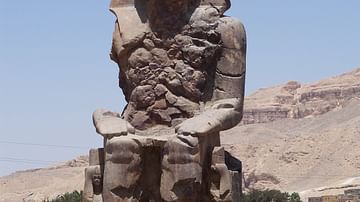
Image
Colossus of Memnon
The south colossal statue of Amenhotep III, one of a pair of such figures known as the Colossi of Memnon. 18th Dynasty, 14th century BCE. Luxor, Egypt.
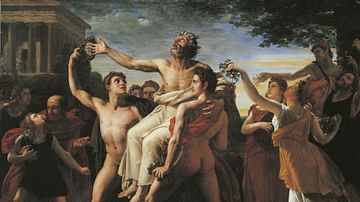
Image
Diagoras of Rhodes
Diagoras is carried by his two sons after an Olympic victory, painting by Auguste Vinchon, 1814.
National School of Fine Arts (Beaux-Arts de Paris), Paris.

Video
Colossus of Constantine
More free lessons at: http://www.khanacademy.org/video?v=MuD06cnjtAM The Colossus of Constantine, c. 312-15, Palazzo dei Conservatori, Musei Capitolini, Rome A conversation between Dr. Beth Harris and Dr. Steven Zucker in front of the Colossus...
Collection
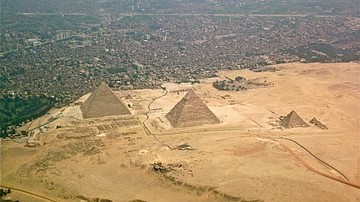
A Collection: 7 Wonders of the Ancient World
In this collection we look in detail at each of the Seven Wonders of the Ancient World. The oldest and only surviving wonder is the Great Pyramid of Giza which held the record for the tallest structure in the world until the 19th century...

Article
A Visual Who's Who of Greek Mythology
Achilles The hero of the Trojan War, leader of the Myrmidons, slayer of Hector and Greece's greatest warrior, who sadly came unstuck when Paris sent a flying arrow guided by Apollo, which caught him in his only weak spot, his heel. Adonis...

Video
Sprinter on a Vase from Rhodes and a Bronze Running Girl
The greatest Olympic runner of all was Leonidas of Rhodes who won all three running events at each of the four successive Olympiads between 164 and 152 BCE. Women competed in foot races at Olympia, but these were not part of the Olympic Games...

Image Gallery
Reconstructions of the Seven Wonders of the Ancient World
This collection features reconstructions of the Seven Wonders of the Ancient World; from the Hanging Gardens of Babylon to the Colossus of Rhodes. Out of the Seven Wonders, only one is still standing today - albeit in a damaged state - the...

Article
Pherenike the Female Olympic Trainer
Pherenike (l. c. 388 BCE, also known as Kallipateira) was an athlete from Rhodes who, because she was a woman, could not compete in the Olympic Games and, as a married woman, was not allowed to even watch them. Defying these rules and risking...
