
Search
Did you mean: Aedile?
Remove Ads
Advertisement

 This answer was generated by
Search Results

Article
The Textile Industry in the British Industrial Revolution
During the Industrial Revolution (1760-1840), textile production was transformed from a cottage industry to a highly mechanised one where workers were present only to make sure the carding, spinning...
Image
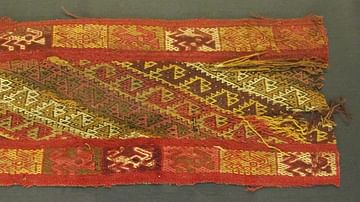
Textile Fragment, Pachacamac
A textile fragment from a tomb at the sacred Andean site of Pachacamac, south of Lima. (Historisches Museum Bern, Switzerland)
Image
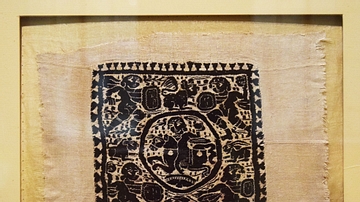
Coptic Textile of St. Joseph
This Coptic linen textile spun from wool depicts scenes from the life of St. Joseph, including images of a horseman, four warriors, animals, a grapevine, a bird, and a running warrior holding a spear. Egypt, c. 300-700...

Image
Luddites Smashing Textile Machines
An illustration of Luddites smashing textile machines. The Luddite movement (from 1812) included skilled textile workers who had lost their jobs in the increasingly mechanized textile industry during the Industrial...

Image
Inca Textile Bag
An Inca textile bag with typical tassle decoration. (Lombards Museum)

Image
Inca Geometric Textile Motif
A detail from an Inca textile showing a geometric cross design. (Museo de America, Madrid)
Image
Power Looms in a Textile Mill
An 1835 engraving by J. Tingle (from an illustration by T. Allom) of power looms in a textile mill during the Industrial Revolution. The power loom weaving machine was invented by Edmund Cartwright (1743-1823) in 1785...
Image
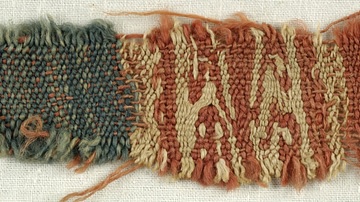
Detail of Coptic Wool Textile
This colourful fragment of a tabby weave is an example of Coptic art. While linen was the preferred textile of ancient Egypt, wool became increasingly important during the Ptolemaic and Roman periods. By Late Antiquity...
Image
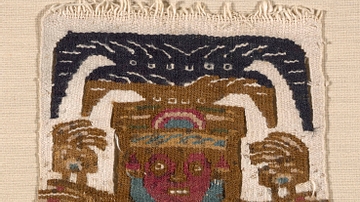
Lambayeque Textile Patch
Patch, 1000/1476 CE. Lambayeque; North Coast, Peru. The Art Institute of Chicago, Kate S. Buckingham Endowment.

Image
Nazca Textile Panel Fragment
Panel Fragment, 200/500 CE. Nazca; south coast, Peru. The Art Institute of Chicago, Restricted gift of Mrs. Edwin A. Seipp.
