
Search
Did you mean: Silla?
Remove Ads
Advertisement
Search Results

Interview
Rubin Museum's Faith and Empire: Tibetan Buddhist Art
Faith and Empire: Art and Politics in Tibetan Buddhism, a new exhibition at the Rubin Museum of Art in New York, explores the dynamic historical intersection of politics, religion, and art as reflected through Tibetan Buddhism. The exhibition...

Definition
Ancient China
Ancient China produced what has become the oldest extant culture in the world. The name 'China' comes from the Sanskrit Cina (derived from the name of the Chinese Qin Dynasty, pronounced 'Chin') which was translated as 'Cin' by the Persians...

Article
Trade in the Roman World
Regional, inter-regional and international trade was a common feature of the Roman world. A mix of state control and a free market approach ensured goods produced in one location could be exported far and wide. Cereals, wine and olive oil...

Article
Parthia: Rome's Ablest Competitor
As a superpower in its own right and in competition with Rome, Parthia's empire - ruling from 247 BCE to 224 CE - stretched between the Mediterranean in the west to India in the east. Not only did the Parthians win battles against Rome they...

Definition
Ancient Chinese Art
Ancient China covered a vast and ever-changing geopolitical landscape, and the art it produced over three millennia is, unsurprisingly, just as varied. Still, despite continuous indigenous technical developments, changes in materials and...

Article
Trade in the Phoenician World
The Phoenicians, based on a narrow coastal strip of the Levant, put their excellent seafaring skills to good use and created a network of colonies and trade centres across the ancient Mediterranean. Their major trade routes were by sea to...
Definition
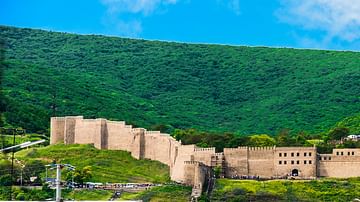
Derbent
Derbent (sometimes "Derbend" or "Darbend") is an ancient city located along the Caspian Sea in what is present-day Russia. Although the area in and around Derbent has been continuously inhabited since at least the 8th century BCE, Shah Yazdegerd...

Article
Daily Life in Ancient China
Daily life in ancient China changed through the centuries but reflected the values of the presence of gods and one's ancestors in almost every time period. Villages like Banpo show evidence of a matriarchal society, where there was a priestly...

Collection
Trade in the Ancient World
Trade has been going on for as long as humans have needed or wanted something that others had and they did not. Bartering for goods and trade in kind developed into more sophisticated forms of exchanges using commonly agreed commodity currencies...

Definition
Meiji Period
The Meiji period refers to the period in Japanese history from 1868 to 1912 during which the Meiji Emperor reigned. Following the overthrow of the Tokugawa shogunate in the Meiji Restoration of 1868, Japan's new leaders embarked on a program...
