
Search
Did you mean: Hecate?
Remove Ads
Advertisement
Search Results
Definition
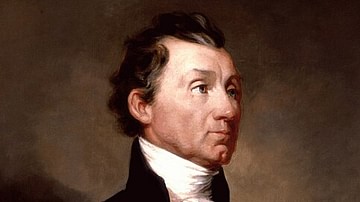
James Monroe
James Monroe (1758-1831) was an American statesman who served as the fifth president of the United States (1817-1825). The fourth president to belong to the so-called 'Virginia Dynasty', and the last of the generation of the Founding Fathers...

Definition
Jay Treaty
The Jay Treaty, formally known as the Treaty of Amity, Commerce, and Navigation, Between His Britannic Majesty and the United States of America, was a controversial treaty signed by representatives of the United States and Great Britain in...
Definition
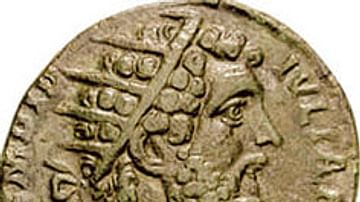
Didius Julianus
Didius Julianus was Roman emperor from March to June 193 CE. On March 28, 193 CE Roman Emperor Pertinax was assassinated by the Praetorian Guard, and like his predecessor Commodus, he left no apparent successor. Two possible claimants presented...
Definition
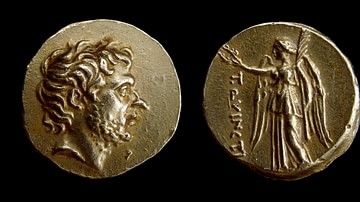
Titus Quinctius Flamininus
Titus Quinctius Flamininus (229-174 BCE) was a consul and military commander of the Roman Republic during the Second Macedonian War, who decisively defeated Philip V of Macedon (r. 221-179 BCE) at the Battle of Cynoscephalae in 197 BCE and...

Image
Cicero Denounces Catiline
A fresco by Cesare Maccari (1840-1919 CE) depicting Roman senator Cicero (106-43 BCE) denouncing the conspirator Catiline in the Roman senate. (Palazzo Madama, Rome)

Image
The Curia
The Curia. The meeting house of the Senate of Rome. The present building was begun by Julius Caesar in 44 BCE and later completed and dedicated by Augustus Caesar around 29 BCE. The building was rebuilt around 238 CE by Diocletian.
Article
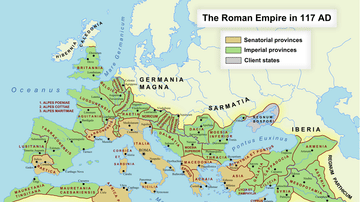
The Extent of the Roman Empire
Time has seen the rise and fall of a number of great empires - the Babylonian, the Assyrian, the Egyptian, and lastly, the Persian. Regardless of the size or skill of their army or the capabilities of their leaders, all of these empires fell...

Article
Constantine’s Conversion to Christianity
Constantine I (Flavius Valerius Constantinus) was Roman emperor from 306-337 CE and is known to history as Constantine the Great for his conversion to Christianity in 312 CE and his subsequent Christianization of the Roman Empire. His conversion...

Article
The Roman Toga
The toga was an item of clothing worn by men who were citizens of Rome. The toga consisted of a single length of wool cloth cut in a semicircle and wrapped around the body of the wearer without any fastenings. The Roman toga was a clearly...

Article
The Propaganda of Octavian and Mark Antony's Civil War
Propaganda played an important role in Octavian (l. 63 BCE - 14 CE) and Mark Antony's (l. 83 – 30 BCE) civil war, and once victorious at the Battle of Actium (31 BCE), Octavian returned home to become the first Roman emperor. The decade preceding...
