
Search
Did you mean: Roman Empire?
Remove Ads
Advertisement
Search Results

Image
Imdugud Copper Frieze from the Ninhursag Temple
Frieze from the base of the temple of the goddess Ninhursag at Tell Al-Ubaid. The lion-headed eagle monster, or Imdugud, grasps a pair of deer. Imdugud represents the Sumerian god Ningirsu, and it is unknown...

Image
View of Kiyomizu-dera Temple in Kyoto
The Kiyomizu-dera Temple ("Kiyomizudera" in Japanese) is known throughout Japan for its lovely panorama of the city of Kyoto. Founded in 778 CE and rebuilt in 1633 CE, the temple is situated on Mt. Otowa and its...

Definition
Wall
The English word 'wall' is derived from the Latin, vallus meaning 'a stake' or 'post' and designated the wood-stake and earth palisade which formed the outer edge of a fortification. The palisades were in use early on and are mentioned...

Definition
The Eumenides
The Eumenides is a play written by Aeschylus (c 525 – 455 BCE), the “Father of Greek Tragedy,” the most popular and influential of all tragedians of his era. The Eumenides was the third play of a trilogy, The Oresteia, with the...

Definition
Coricancha
The religious complex of Coricancha (Qorikancha) in the Inca capital at Cuzco contained the Temple of the Sun which was not only the most sacred site or huaca in the Inca religion but was considered the very centre of the Inca world...
Definition
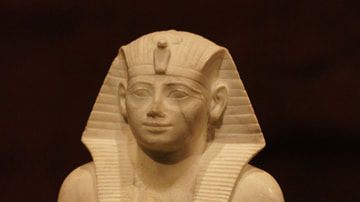
Thutmose III
Thutmose III (also known as Tuthmosis III, r. 1458-1425 BCE) was the 6th king of Egypt's 18th Dynasty, one of the greatest military leaders in antiquity, and among the most effective and impressive monarchs in Egypt's history. His...

Definition
Nephthys
Nephthys was one of the original five gods of ancient Egypt born of the union of Geb (earth) and Nut (sky) after the creation of the world. She was the fourth born after Osiris, Isis, and Set and was the older sister of Horus (usually...

Definition
Ancient Nara
Nara, located around 30 km south of modern Kyoto, was the capital of ancient Japan between 710 and 784 CE. It gave its name to the Nara Period (710-794 CE), although the name during the 8th century CE was Heijokyo. Modelled on the...

Definition
Plutus (Play)
Plutus (aka Wealth) is a play written by the great Greek comedy playwright Aristophanes in 388 BCE. It was the last of his plays to be performed during his lifetime. Like his earlier play Ecclesiazusae (The Assemblywomen), Wealth...

Definition
Decebalus
Decebalus (c. 87-106 CE) was the king of Dacia (roughly modern-day Romania and Moldova) who fought two wars with Rome under Trajan (in 101-102 CE and 105-106 CE) in defense of his kingdom. Trajan (r. 98-117 CE) was renewing a conflict...
