
Search
Remove Ads
Advertisement
Search Results
Image
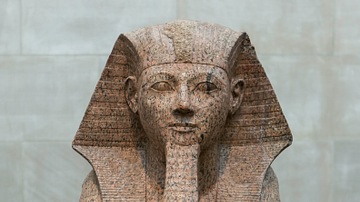
Sphinx of Hatshepsut
Sphinx of Hatshepsut (ca. 1479–1458 BCE). This colossal sphinx portrays the female pharaoh Hatshepsut with the body of a lion and a human head wearing a nemes–headcloth and false beard. The sculptor has carefully observed...

Image
Hatshepsut (Artistic Facial Reconstruction)
The re-created face of Hatshepsut, the Egyptian pharaoh who reigned from approximately 1479 to 1458 BCE. She is widely regarded as one of the most successful pharaohs in ancient Egyptian history and is notable...
Image
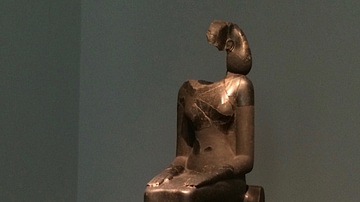
Diorite Statue of Hatshepsut
This black diorite statue of Maatkare Hatshepsut is a unique example of the king's personal artistic style. Most likely dating from the early years of her kingship, Hatshepsut is portrayed as fully-female, with breasts...
Image
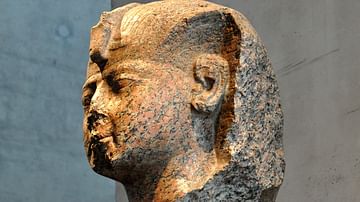
Head of Hatshepsut
Rose granite head of the statue of queen Hatshepsut. She wears the royal headdress and was depicted as a pharaoh. From modern-day Egypt. New Kingdom, 18th Dynasty, circa 1460 BCE. (State Museum of Egyptian Art, Munich, Germany...
Article
The Sea Dogs - Queen Elizabeth's Privateers
The sea dogs, as they were disparagingly called by the Spanish authorities, were privateers who, with the consent and sometimes financial support of Elizabeth I of England (r. 1558-1603 CE), attacked and...

Image
Hatshepsut's Temple, Karnak
Hatshepsut's temple at Karnak, Thebes with a colossal statue of Amenhotep I. Limestone, 15th century BCE.

Image
Hatshepsut (Artist's Impression)
Egyptian Pharaoh Hatshepsut (1479-1458 BCE) depicted in the game Old World.

Image
Birth Colonnade, Hatshepsut's Temple
The Birth Colonnade told the story of Hatshepsut’s (1479-1458 BCE) divine creation with Amun as her true father.
Definition
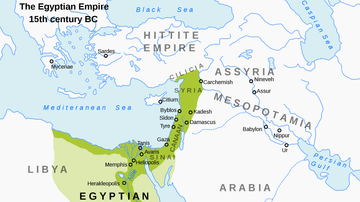
Egyptian Empire
The Egyptian Empire rose during the period of the New Kingdom (c. 1570- c. 1069 BCE), when the country reached its height of wealth, international prestige, and military might. The empire stretched from modern-day Syria in the...
Image
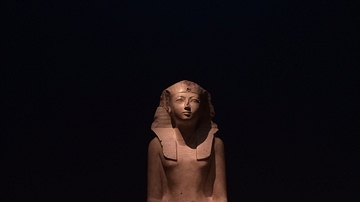
Seated Statue of Maatkare Hatshepsut
This statue of the female pharaoh Hatshepsut is a prime example of the female king's penchant for blending male and female attributes in her artwork. It depicts the pharaoh bare chested in a kilt, yet with female...
