
Search
Remove Ads
Advertisement
Search Results

Image
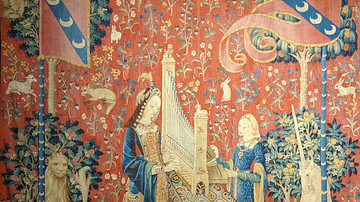
The Lady and the Unicorn: Taste
The Lady and the Unicorn are six tapestries depicting a medieval lady in various poses. Each scene depicts one of the five senses; the sixth scene is labelled À Mon Seul Désir ("to my only desire") whose meaning is...
Image
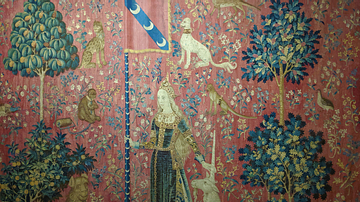
The Lady and the Unicorn: Hearing
The Lady and the Unicorn are six tapestries depicting a medieval lady in various poses. Each scene depicts one of the five senses; the sixth scene is labelled À Mon Seul Désir ("to my only desire") whose meaning...
Image
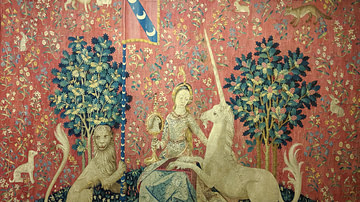
The Lady and the Unicorn: Touch
The Lady and the Unicorn are six tapestries depicting a medieval lady in various poses. Each scene depicts one of the five senses; the sixth scene is labelled À Mon Seul Désir ("to my only desire") whose meaning is...
Image
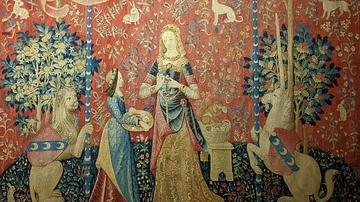
The Lady and the Unicorn: Sight
The Lady and the Unicorn are six tapestries depicting a medieval lady in various poses. Each scene depicts one of the five senses; the sixth scene is labelled À Mon Seul Désir ("to my only desire") whose meaning is...
Image
The Lady and the Unicorn: Smell
The Lady and the Unicorn are six tapestries depicting a medieval lady in various poses. Each scene depicts one of the five senses; the sixth scene is labelled À Mon Seul Désir ("to my only desire") whose meaning is...

Article
Chinese Lacquerware
Lacquer was a popular form of decoration and protective covering in ancient China. It was used to colour and beautify screens, furniture, bowls, cups, sculpture, musical instruments, and coffins, where it could be carved, incised...

Article
Swords in Ancient Chinese Warfare
Although the bow and crossbow were the weapons of choice for much of China's history, the sword played its part, especially when warriors were forced to dismount and face the enemy at close quarters. Widely used...
Article
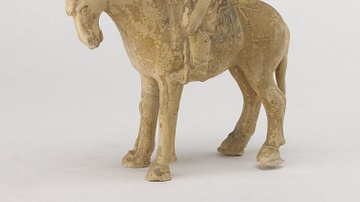
Archers in Ancient Chinese Warfare
The bow was the most common weapon in ancient Chinese warfare and the skill of using it was the most esteemed martial art for millennia. Archers were used as infantry, chariot riders, and cavalry over the centuries...

Article
Daily Life in Ancient China
Daily life in ancient China changed through the centuries but reflected the values of the presence of gods and one's ancestors in almost every time period. Villages like Banpo show evidence of a matriarchal society, where...

Article
Mongol Multiculturalism
The Mongol Empire accepted and promoted many other cultures. Historians often talk about cultural exchange across Asia in the Mongol Empire as something that was just facilitated by peace and stability across such a huge...
