
Search
Remove Ads
Advertisement

 This answer was generated by
 Search Results
Image
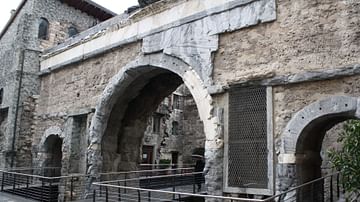
Porta Praetoria, Aosta
One of the gates of the 25 BCE double Praetorian Gate of Aosta in northern Italy. The two gates stand 12 m apart and each has three arched entrances - one central gateway for wheeled vehicles and two smaller passages positioned either side...

Image
The Porta Praetoria of Saalburg Roman Fort
The reconstructed Porta Praetoria, the main gate of the Saalburg Roman Fort. The gate takes its name from the Via Praetoria, the camp’s road running in a north-south direction. Between the two gates, a bronze statue of emperor Antoninus Pius...
Image
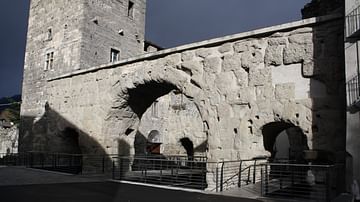
Praetorian Gate, Aosta
The interior gate of the 25 BCE double Praetorian Gate of Aosta in northern Italy. The two gates stand 12 m apart and each has three arched entrances - one central gateway for wheeled vehicles and two smaller passages positioned either side...

Image
Castra Praetoria
A section of the remaining walls of the castra praetoria, the camp in Rome for the Praetorian Guard from 23 CE.

Image
Roman Theatre Façade, Aosta
The 22 m high façade (scaena) of the Roman theatre at Aosta in northern Italy. The theatre was constructed in the 1st century CE and further extended in the 3rd century CE. The theatre had a capacity of 3-4,000 spectators.

Image
Arch of Augustus, Aosta
The Triumphal Arch known as the Arch of Augustus in Aosta, northern Italy. The arch was erected in the reign of Augustus in 25 BCE to honour the emperor and his victory over the Salssi. The central iron crucifix and roof are more modern additions...

Image
Surrender of the Duke of Aosta
Amedeo Duke of Aosta (1898-1942), Viceroy of Ethiopia, with British General Mosley Mayne (1889-1955) and other British officers after the Italian surrender to the British troops at Amba Alagi. The Duke of Aosta was in charge of the Italian...
Image
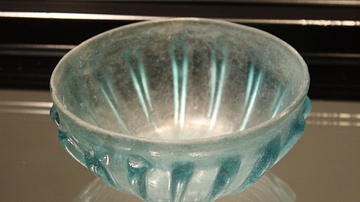
Roman Glass Bowl, Aosta
A Roman glass bowl or cup with moulded ribs. From the western cemetery of Aosta, northern Italy. Mid-1st century CE. (Archaeological Museum, Aosta)
Image
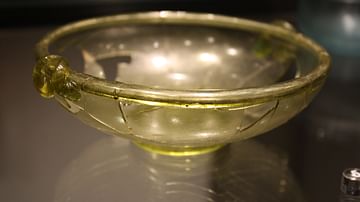
Roman Yellow Glass Bowl, Aosta
A 1st century CE Roman blown glass bowl with added 'omega' handles. From the western cemetery of Aosta, North Italy. (Archaeological Museum, Aosta)

Definition
Roman Fort
The Roman army constructed both temporary and permanent forts and fortified military camps (castrum) across the frontiers of the empire's borders and within territories which required a permanent military presence to prevent indigenous uprisings...
