
Search
Did you mean: Sardis?
Remove Ads
Advertisement
Search Results
Article
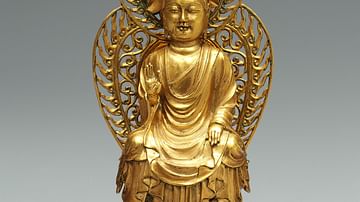
Buddhism in Ancient Korea
Buddhism, in Korean Bulgyo, was introduced by monks who visited and studied in China and then brought back various Buddhist sects during the Three Kingdoms period. It became the official state religion in all Three Kingdoms...

Article
Ten Ancient Persia Facts You Need to Know
Ancient Persian culture exerted a powerful influence throughout the Near East, and beyond, for over a thousand years between c. 550 BCE - 651 CE and many aspects of their culture continued to influence others...

Article
Twelve Ancient Persian Mythological Creatures
The mythology of any civilization reflects its core values, greatest fears, and highest hopes and so it is with the mythology of ancient Persia. The great heroes like Karsasp, Thraetaona, and Rustum express...
Article
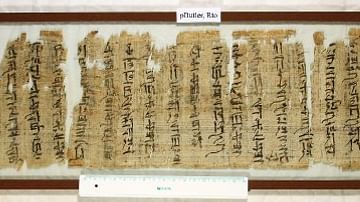
The Eloquent Peasant & Egyptian Justice
The Tale of the Eloquent Peasant is a literary work from the Middle Kingdom of Egypt (2040-1782 BCE) which illustrates the value society placed on the concept of justice and equality under the law. In the story...

Article
Twelve Menacing & Protective Mythological Figures
The term mythology comes from the Greek words mythos (“story of the people”) and logos (“word”) and so is defined as the spoken (later written) story of a culture. Modern scholars have divided myths...

Article
Magic in Ancient Egypt
In ancient Egypt, if a woman were having difficulty conceiving a child, she might spend an evening in a Bes Chamber (also known as an incubation chamber) located within a temple. Bes was the god of childbirth, sexuality...

Article
Gods & Goddesses of Ancient Egypt - A Brief History
The land of ancient Egypt was alive with the spirit of the gods. The sun god Ra broke from the darkness every morning in his great boat, bringing the light, and many of the gods watched over the people...

Article
Police in Ancient Egypt
In any society, members of the community recognize they are required to restrain certain impulses in order to participate in the community. Every civilization has had some form of law which makes clear that the benefits...

Article
A Ghost Story of Ancient Egypt
The best-known ghost story from ancient Egypt is known, simply, as A Ghost Story but sometimes referenced as Khonsemhab and the Ghost. The story dates from the late New Kingdom of Egypt (c. 1570 - c.1069 BCE) and specifically...

Article
The Five Gifts of Hathor: Gratitude in Ancient Egypt
The central cultural value of ancient Egypt was ma'at – harmony and balance – which maintained the order of the universe and the lives of the people. Keeping balance in one's life encouraged the same...
