
Search
Search Results

Article
The Siege of Damascus, 1148 CE
The siege of Damascus in 1148 CE was the final act of the Second Crusade (1147-1149 CE). Lasting a mere four days from 24 to 28 July, the siege by a combined western European army was not successful, and the Crusade petered out with its leaders...
Article
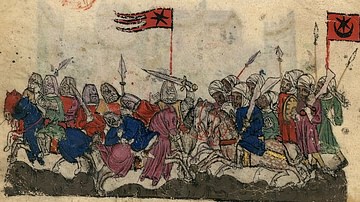
Battle of Yarmouk
The Battle of Yarmouk River (or Yarmuk River; also written as the Battle of Jabiya-Yarmuk) was fought over the course of six days, from 15 to 20 August 636 CE, between the Muslim army of the Rashidun Caliphate (632-661 CE), under Khalid ibn...

Definition
Kahina
Kahina (7th century CE) was a Berber (Imazighen) warrior-queen and seer who led her people against the Arab Invasion of North Africa in the 7th century CE. She is also known as al-Kahina, Dihya al-Kahina, Dahlia, Daya, and Dahia-al-Kahina...
Article
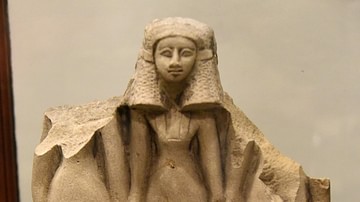
Female Physicians in Ancient Egypt
A famous story from Greece relates how a young woman named Agnodice wished to become a doctor in Athens but found this forbidden. In fact, a woman practicing medicine in Athens in the 4th century BCE faced the death penalty. Refusing to give...

Article
Festivals in Ancient Egypt
The gods of the ancient Egyptians were always apparent to the people through natural events. The sunrise was Ra emerging from the underworld in his great ship, for example, and the moon was the god Khonsu traveling across the night sky. When...

Article
Social Structure in Ancient Egypt
The society of ancient Egypt was strictly divided into a hierarchy with the king at the top and then his vizier, the members of his court, priests and scribes, regional governors (eventually called 'nomarchs'), the generals of the military...
Article
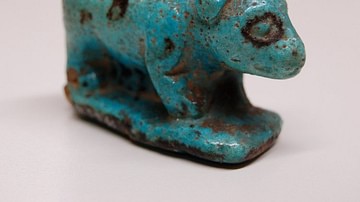
Dogs in Ancient Egypt
The dog as "man's best friend" has a long history going back to the ages long before the civilization of ancient Egypt was established but the Egyptians were among the earliest people to recognize the value of the dog and show their appreciation...
Article
Jobs in Ancient Egypt
In ancient Egypt, the people sustained the government and the government reciprocated. Egypt had no cash economy until the coming of the Persians in 525 BCE. The people worked the land, the government collected the bounty and then distributed...

Definition
Abbasid Dynasty
The Abbasids were an Arabic dynasty that initially ruled over most of the Islamic empire (save some western parts) after assuming the caliphate in 750 CE, later on, their empire fragmented, however, they retained spiritual supremacy as caliphs...

Definition
Harper's Songs of Ancient Egypt
Harper's songs were lyrics composed in ancient Egypt to be sung at funeral feasts and inscribed on monuments. They derive their name from the image which accompanies the text on tomb or chapel walls, stelae, and papyri in which a blind harper...
