
Search
Remove Ads
Advertisement
Search Results
Image
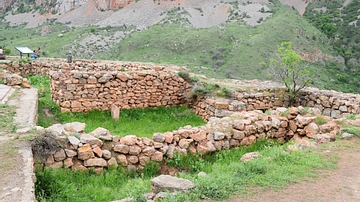
Ruins of the Academia at Noravank Monastery
These are the ruins of the old academia at Noravank Monastery in Armenia. In medieval times, Noravank was a center of Armenian art, culture, and learning.
Image
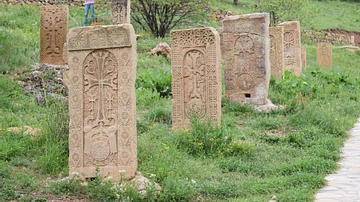
Khachkars at Noravank Monastery
These medieval khachkars can be found at the Noravank Monastery, which is located in present-day Armenia.
Image
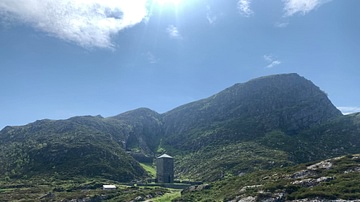
Selja Monastery
The monastery ruins on Selja Island, Stad, Norway. The Benedictine abbey was constructed in the 11th century CE and was linked to the legend of Saint Sunniva (10th century CE).
Image
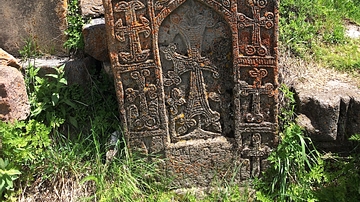
Khachkar at Arates Monastery in Armenia
Most of the ruins at Arates Monastery in Armenia date from the 10-13th centuries CE, and the khachkars and tombstones date from between the 10-17th centuries CE.
Image
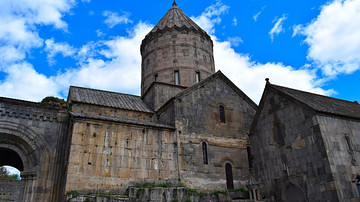
Exterior View of the Church of St. Pogos and Petros at Armenia's Tatev Monastery
The exterior of the Church of St. Pogos and Petros at Tatev Monastery in Armenia. The church dates from the end of the 9th century and was reconstructed several times over the centuries due to earthquakes.

Image
Medieval Window at Tatev Monastery
Armenia's Tatev Monastery was founded in the 9th century CE, and it is famous for its architecture and history.
Image
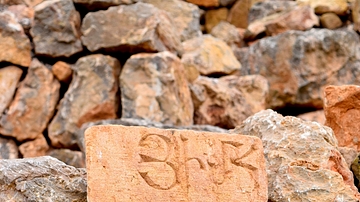
Fragment from Armenia's Noravank Monastery
This ruined fragment is located within Armenia's medieval Noravank Monastery. It contains writing in the Armenian script.
Image
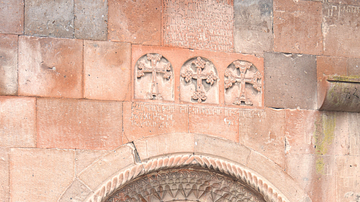
Entrance to the Armenian Khor Virap Monastery
Entrance to the Khor Virap Monastery, which is located near the border with Turkey some 8 km (5 mi) from the town of Artashat, Armenia. It is one of the most visited and sacred sites in Armenia.
Image
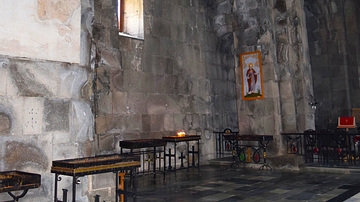
Interior of Church of St. Pogos and Petros at Tatev Monastery
This is a glimpse of the interior of the Church of St. Pogos and Petros at Tatev Monastery in Armenia. This church dates from the end of the 9th century CE. It was reconstructed several times over the centuries due to earthquakes.
Image
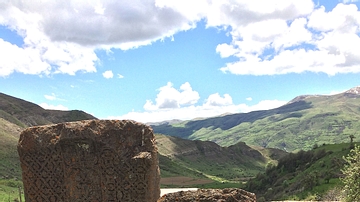
Khachkars at Arates Monastery in Armenia
Most of the ruins at Arates Monastery in Armenia date from the 10-13th centuries CE, and the khachkars and tombstones date from between the 10-17th centuries CE.
