
Search
Remove Ads
Advertisement
Search Results
Image
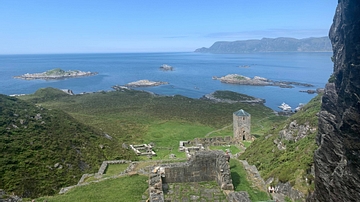
View of Selja Monastery
View of the monastery ruins on Selja Island, Stad, Norway from the sacred cave on the island. The Benedictine abbey was constructed in the 11th century CE and was linked to the legend of Saint Sunniva (10th century CE).
Image
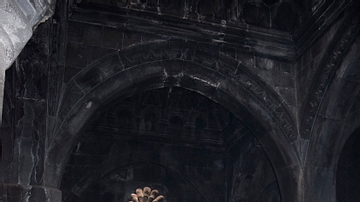
Geghard Monastery's Interior
At its height in the 13th century CE, Geghard Monastery in what's present-day Armenia benefited from the patronage of Armenian and Georgian princely families, and it was a pilgrimage site. Among its reliquaries were supposedly the spear used...

Image
Stone Architecture at Tatev Monastery
Tatev Monastery was one of medieval Armenia's most important religious and cultural centers during the Middle Ages. It's renown for its stone architecture and location on a large basalt plateau near the Tatev village in Syunik Province in...
Image
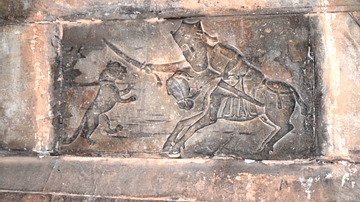
Hunting Scene Bas-Relief at Noravank Monastery
This medieval bas-relief of a hunting scene is located within the Surb Karapet Church at Noravank Monastery in modern Armenia.
Image
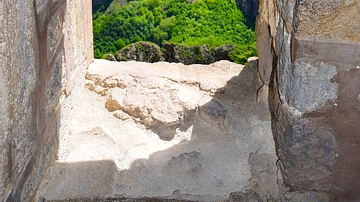
View from a Window at Tatev Monastery in Armenia
The medieval Tatev Monastery in present-day Armenia is one of the country's "architectural gems." It was first constructed in the 9th century CE.
Image
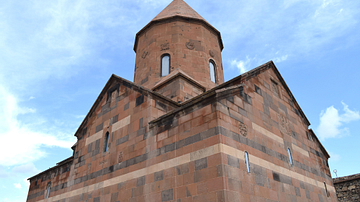
St. Astvatsatsin Church at Khor Virap Monastery
Khor Virap is an ancient Armenian monastery located near the border with Turkey some 8 km (5 mi) from the town of Artashat, Armenia. Legend has it that St. Gregory the Illuminator (c. 257-c. 331 CE) was imprisoned here for 14 years by Tiridates...
Image
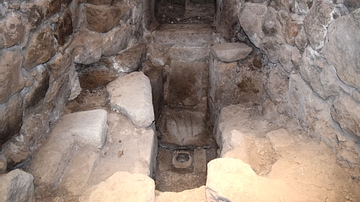
Tatev Monastery's Oil Mill
Oil mills have existed in Armenia since the Urartian era, and their archaeological remains can be found in all regions of Armenia. This oil mill at Tatev Monastery in Armenia dates from the 17th century CE.
Image
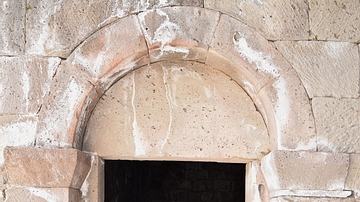
Doorway at Tatev Monastery in Armenia
Originally established in the 4th century CE, Tatev Monastery, which is located on a large basalt plateau in Armenia's Syunik Province, flourished as a center of learning and culture during the Middle Ages.
Image
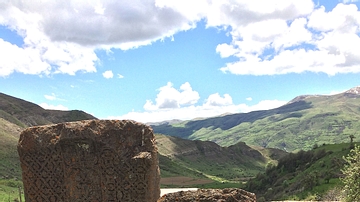
Khachkars at Arates Monastery in Armenia
Most of the ruins at Arates Monastery in Armenia date from the 10-13th centuries CE, and the khachkars and tombstones date from between the 10-17th centuries CE.
Image
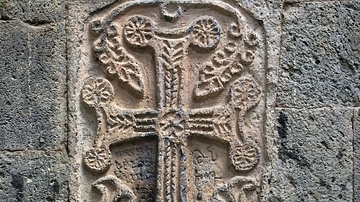
Khachkar in the Wall at Arates Monastery in Armenia
The majority of the ruins at Arates Monastery in Armenia date from the 10-13th centuries CE, and the khachkars and tombstones date from between the 10-17th centuries CE.
