
Search
Did you mean: Minoan Art?
Remove Ads
Advertisement
Search Results
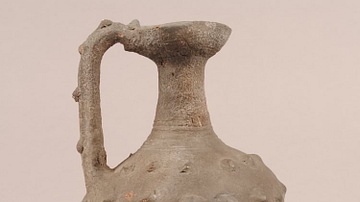
Image
Minoan Barbotine Jug
A Minoan jug in the Barbotine style where decorative excrescenses were added to the vessel, 1850-1800 BCE from Knossos. (British Museum, London).
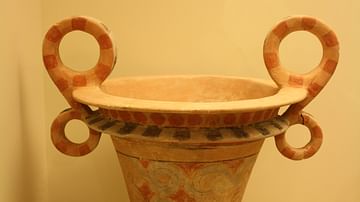
Image
Minoan Vase
Late Minoan polychrome vase, mid-15th century BCE, from Isopata. (Archaeological Museum, Heraklion)
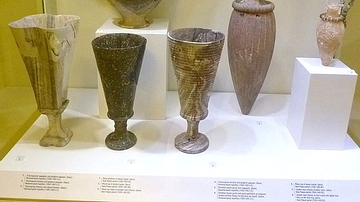
Image
Minoan Stone Vases
A range of stone vessels from Minoan Crete, 15th century BCE. (Archaeological Museum of Herakllion, Crete).
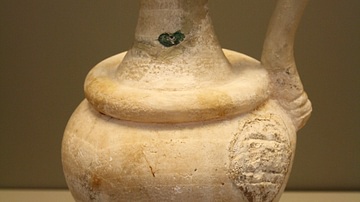
Image
Minoan Stone Jug
A Minoan alabaster jug, Crete, 15th century BCE. (National Archaeological Museum, Athens)
Image
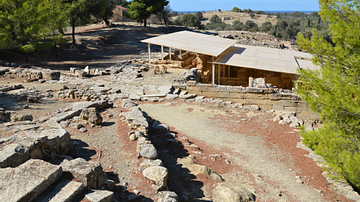
Hagia Triada Minoan Settlement
The Minoan settlement of Hagia Triada archaeological site, Crete (1600-1450 BCE).

Image
Minoan Rock-Crystal Vase
A Minoan vase carved from rock-crystal, from Zakros on Crete, c. 1450 BCE. The collar includes gilded ivory discs and the handle is made from rock-crystal beads strung on bronze wire. The vessel was probably used to pour liquids in religious...

Definition
Thera
Thera is the ancient name for both the island of Santorini in the Greek Cyclades and the name of the volcano which famously erupted on the island in the middle Bronze Age. The 17th century BCE eruption covered Akrotiri, the most important...
Image
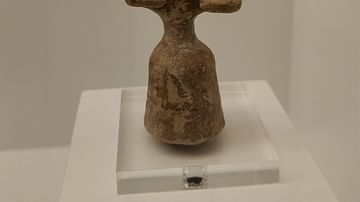
Minoan Female Figurine
The figure is wearing a cylindrical skirt and is bringing her arms to her chest. Figurines of this type are known from Minoan shrines and are probably representing the Adorants. From Herakleion district, Crete. Late Minoan II-IIIA1 Period...
Article
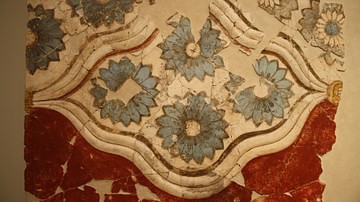
Akrotiri Frescoes
The Bronze Age frescoes from Akrotiri on the Aegean island of Thera (modern-day Santorini) provide some of the most famous images from the ancient Greek world. Sometime between 1650 and 1550 BCE Thera suffered a devastating earthquake which...

Image
Minoan Double Axes
Gold votive double axes, New Palace period (1600-1450 BCE), Heraklion Archaeological Museum, Crete.
The double axe, also known as 'labrys', may be the origin of the labyrinth myth of Knossos.
