
Search
Did you mean: Minoan Art?
Remove Ads
Advertisement
Search Results

Article
Minoan Pottery
The ever evolving pottery from the Minoan civilization of Bronze Age Crete (2000-1500 BCE) demonstrates, perhaps better than any other medium, not only the Minoan joy in animal, sea and plant life but also their delight in flowing, naturalistic...

Article
Ancient Greek Clothing
Ancient Greek clothing developed from the Minoan Civilization of Crete (2000-1450 BCE) through the Mycenean Civilization (1700-1100 BCE), Archaic Period (8th century to c. 480 BCE) and is most recognizable from the Classical Period (c. 480-323...

Definition
Bronze Age Aegean
The Bronze Age (c. 3000-1000 BCE) is the period when cultures were either using, producing, or trading bronze. Several cultures flourished around the Aegean Sea during this period: the Minoan civilization on Crete, the Mycenaean civilization...
Definition
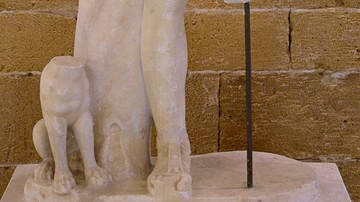
Britomartis
Britomartis, also known as Diktynna (Dictynna), was the Cretan goddess of hunting and fishing nets in Greek mythology. Although referred to as a nymph and worshipped locally, she had at least two significant and active shrines, one in Crete...

Definition
Ancient Crete
Crete is an island in the eastern Mediterranean which during the Bronze Age produced the influential Minoan civilization with its distinctive architecture and art. An important member of the Greek world in the Archaic period, Crete dipped...

Definition
Mycenaean Art
The Mycenaean civilization flourished in the late Bronze Age from the 15th to the 13th century BCE, and their artists would continue the traditions passed on to them from Minoan Crete. Pottery, frescoes, and goldwork skillfully depicted scenes...
Definition
Knossos
Knossos (pronounced Kuh-nuh-SOS) is the ancient Minoan palace and surrounding city on the island of Crete, sung of by Homer in his Odyssey: “Among their cities is the great city of Cnosus, where Minos reigned when nine years old, he that...
Image
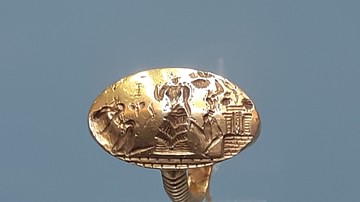
Minoan Gold Signet Ring with Three Figures before a Temple
Gold signet ring showing one female and two male figures before a temple, from Phourni, Crete, c. 1700-1450 BCE. Heraklion Archaeological Museum, Crete. Minoan religion is characterized by the prominent role of female figures engaged in...

Image
Minoan Snake Goddess, Knossos.
Faience figurine of the Minoan Snake Goddess - her dominion was over nature and fertility. New-Palace period (1600 BCE). Heraklion Archaeological Museum, Crete.
Image
Minoan Horns of Consecration
Bull horns were a common religious symbol in the Cretan Minoan culture (2000 BCE - 1450 BCE), represented in fresco, on pottery and as here from the palace of Knossos, in architectural stone decoration.
