
Search
Remove Ads
Advertisement
Search Results

Definition
Redbad
Redbad, the king of Frisians (c. 680- c. 719) was known in early medieval history for his contribution to keeping the ardent nature of the Frisian culture alive. He refused to convert to the new religion and fevered the followers of the...

Definition
Northern Cheyenne Exodus
The Northern Cheyenne Exodus (1878-1879) is the modern-day term for the attempt by the Northern Cheyenne under chiefs Morning Star (Dull Knife, l. c. 1810-1883) and Little Wolf (also known as Little Coyote, l. c. 1820-1904...

Definition
Constantinople
Built in the seventh century BCE, the ancient city of Byzantium proved to be a valuable city for both the Greeks and Romans. Because it lay on the European side of the Strait of Bosporus, the Emperor Constantine understood its...

Definition
Samothrace
Samothrace (Samothrake) is a Greek island in the northern Aegean which was prominent from the Classical period as a member of the Delian League. Its greatest claim to fame was as a cult centre favoured by Macedon and visited by pilgrims...

Definition
Column
The column was an architectural invention that allowed for the support of ceilings without the use of solid walls. Columns increase the space which can be spanned by a ceiling, allowing the entrance of more light. Columns also offer an...
Definition
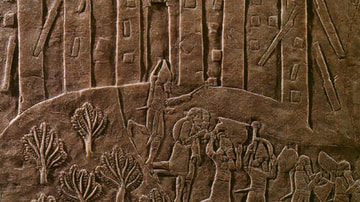
War in Ancient Times
The word 'war' comes to English from the old High German language word Werran (to confuse or to cause confusion) through the Old English Werre (meaning the same), and is a state of open and usually declared armed conflict...

Definition
Polis - The City-State of Ancient Greece
A polis (plural: poleis) was the typical structure of a community in the ancient Greek world. A polis consisted of an urban centre, often fortified and with a sacred centre built on a natural acropolis or harbour...

Definition
Indo-European Languages
The Indo-European languages are a family of related languages that today are widely spoken in the Americas, Europe, and also Western and Southern Asia. Just as languages such as Spanish, French, Portuguese and Italian are...

Definition
Attila the Hun
Attila the Hun (r. 434-453 CE) was the leader of the ancient nomadic people known as the Huns and ruler of the Hunnic Empire, which he established. His name means "Little Father" and, according to some historians, may not have...

Definition
Cybele
History verifies the importance of religion not only on a society's development but also on its survival; in this respect the Romans were no different than other ancient civilizations. During the formative years of the Roman Republic...
