
Search
Remove Ads
Advertisement
Search Results

Image
Arsacid Armenia
Kingdom of Armenia under the Arsacid dynasty, c. 150 BCE

Article
The Unicorn Myth
The unicorn, a mythical creature popularized in European folklore, has captivated the human imagination for over 2,000 years. For most of that time, well into the Middle Ages, people also believed them to be real. The roots of...
Definition
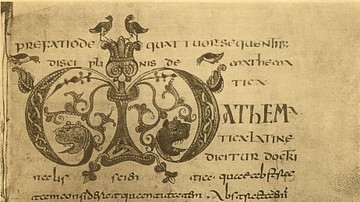
Etymologiae
The Etymologiae (Etymologies) is a Latin work by Isidore of Seville (l. c. 560 - 636 CE), compiled in the early 7th century CE and published in its final form shortly after his death. The book is a type of medieval encyclopedia and...

Definition
Shogun
The shoguns of medieval Japan were military dictators who ruled the country via a feudal system where a vassal's military service and loyalty was given in return for a lord's patronage. Established as an institution by the first shogun...

Definition
Japanese Tea Ceremony
The Japanese Tea Ceremony (chanoyu or chado) is a cultural tradition involving very particular places, procedures, and equipment for drinking green tea. Originating as a habit of Chinese Buddhist monks to aid their meditation...

Definition
Ninja
Ninja (aka Shinobi) were the specialised assassins, saboteurs, and secret agents of medieval Japanese warfare who were highly-trained proponents of the martial arts, especially what later became known as ninjutsu or 'the art of the ninja'...

Definition
Knights Hospitaller
The Knights Hospitaller was a medieval Catholic military order founded in 1113 CE with the full name of 'Knights of the Order of the Hospital of Saint John of Jerusalem'. After their base was relocated to Rhodes in the early...

Definition
Urartu Art
The art produced by the Urartu civilization, which flourished in ancient Armenia, eastern Turkey, and northwestern Iran from the 9th to 6th century BCE, is best seen in bronze figurines of deities, bronze cauldrons with animal and...
Article
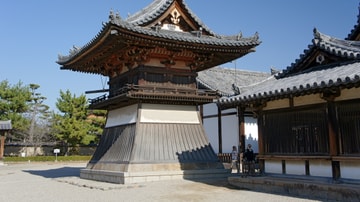
Life in a Japanese Buddhist Monastery
Buddhist monasteries have been part of the Japanese cultural landscape ever since the 7th century CE, and they remained both powerful and socially important institutions right through the medieval period. Today...

Definition
Byzantine Empire
The Byzantine Empire existed from 330 to 1453. It is often called the Eastern Roman Empire or simply Byzantium. The Byzantine capital was founded at Constantinople by Constantine I (r. 306-337). The Byzantine Empire varied in...
