
Search
Remove Ads
Advertisement
Search Results

Definition
Geghard
Geghard (Armenian: Geghardavank or "monastery of the spear") is a medieval monastery located in Armenia's Kotayk province, deep within the Azat Valley, which was built directly out of an adjacent mountain. Geghard is renown throughout...
Definition
Etymologiae
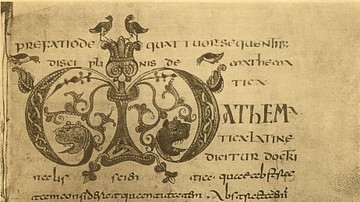
The Etymologiae (Etymologies) is a Latin work by Isidore of Seville (l. c. 560 - 636 CE), compiled in the early 7th century CE and published in its final form shortly after his death. The book is a type of medieval encyclopedia and...

Definition
Shogun
The shoguns of medieval Japan were military dictators who ruled the country via a feudal system where a vassal's military service and loyalty was given in return for a lord's patronage. Established as an institution by the first shogun...

Definition
Japanese Tea Ceremony
The Japanese Tea Ceremony (chanoyu or chado) is a cultural tradition involving very particular places, procedures, and equipment for drinking green tea. Originating as a habit of Chinese Buddhist monks to aid their meditation...

Definition
Ninja
Ninja (aka Shinobi) were the specialised assassins, saboteurs, and secret agents of medieval Japanese warfare who were highly-trained proponents of the martial arts, especially what later became known as ninjutsu or 'the art of the ninja'...

Definition
Knights Hospitaller
The Knights Hospitaller was a medieval Catholic military order founded in 1113 CE with the full name of 'Knights of the Order of the Hospital of Saint John of Jerusalem'. After their base was relocated to Rhodes in the early...
Article
Life in a Japanese Buddhist Monastery
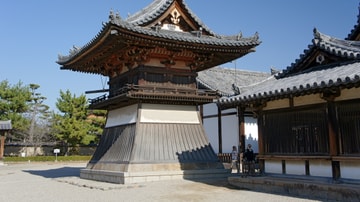
Buddhist monasteries have been part of the Japanese cultural landscape ever since the 7th century CE, and they remained both powerful and socially important institutions right through the medieval period. Today...

Definition
Viking Warfare
Viking warfare, along with its key component of raiding, is inextricably connected with the expansion of Scandinavian influence along the North Atlantic and into the Mediterranean in the Viking Age (c. 790-1100 CE), where the Vikings'...

Definition
Saga
The Old Norse word saga means 'story', 'tale' or 'history' and normally refers specifically to the epic prose narratives written mainly in Iceland between the 12th- and 15th centuries CE, covering the country's history as well as Scandinavia's...

Definition
Edward III of England
Edward III of England reigned as king from 1327 to 1377. Succeeding his father Edward II of England (r. 1307-1327) following his enforced abdication and then murder, Edward III would take revenge on his father's enemies, who...
