
Search
Remove Ads
Advertisement
Search Results

Image
Japanese Beads from the Kofun Period
These beads come from Japan and date from the Kofun period (250-538 CE) in Japanese history. In the Kofun Period beads of various shapes and materials were worn as fashion accessories, used in rituals, and buried...
Image
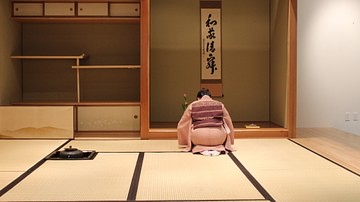
Japanese Tea Room
A traditional Japanese tea room with tatami matting, caligraphy hanging scroll and a single vase of flowers. The hearth is set into the floor on the left.

Image
Japanese Aircraft Carrier Zuikaku
The Japanese aircraft carrier Zuikaku, photograph taken by an unknown photographer in September 1941. The ship was badly damaged in the Battle of the Coral Sea in May 1942 during the Second World War (1939-45...
Image
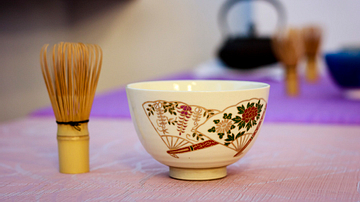
Japanese Whisk & Tea Bowl
A traditional bamboo whisk (chasen) and bowl (chawan) used in the Japanese tea ceremony.
Image
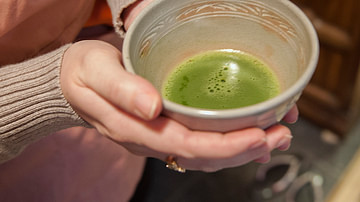
Japanese Green Tea
A bowl of whisked green tea (matcha), typical of the traditional Japanese tea ceremony.
Image
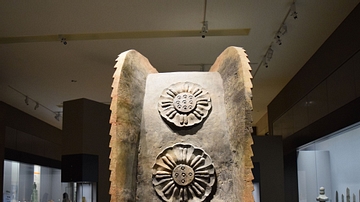
Japanese Ridge-End Ornament
This large block comes from the ruins of Tosaka-dera (Takaidahaiji) in Osaka, Japan. It dates from the Asuka period or the Nara period in Japanese history, which overlapped with the 7th and 8th century CE. (Tokyo National...

Image
Japanese Matcha Green Tea
Matcha, the powdered green tea used in the traditional Japanese tea ceremony.

Image
Japanese Bombing of Darwin, 1942
The bombing of Darwin, Australia, by Japanese bombers in February 1942 during the Pacific War. During the war, Australia provided vital supply routes to US forces deeper in the Pacific.
Australian War Memorial.

Image
Japanese Tea Ceremony Hishaku & Chawan
A hishaku (bamboo ladle) and chawan (bowl) used in the Japanese tea ceremony. Before mixing the tea the bowl is rinsed with fresh water.
Image
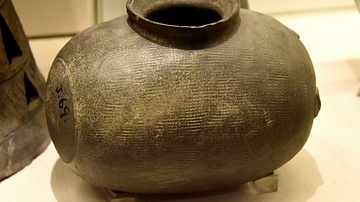
Japanese Funerary Vessel
This Japanese funerary vessel is an example of Sue wares, originally made for tombs. They were probably used for feasting and drinking at the time of the funeral and then buried with the person who had died. They were crafted...
