
Search
Remove Ads
Advertisement
Search Results

Interview
Interview: Rome Strategy of Empire by James Lacey
In this interview, World History Encyclopedia sits down with author James Lacey to chat about his new book Rome: Strategy of Empire published by Oxford University Press. Kelly: Can you tell us a little...

Definition
Akkad and the Akkadian Empire - The First Multinational Empire in the World
The city of Akkad was the seat of the Akkadian Empire (2350/2334-2154 BCE), the first multinational political entity in the world, founded by Sargon the Great, who unified Mesopotamia...

Definition
Ancient Japan
Ancient Japan has made unique contributions to world culture which include the Shinto religion and its architecture, distinctive art objects such as haniwa figurines, the oldest pottery vessels in the world, the largest wooden buildings...
Definition
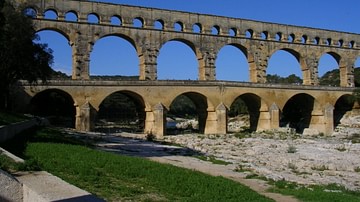
Aqueduct
Aqueducts transport water from one place to another, achieving a regular and controlled supply to a place that would not otherwise receive sufficient quantities. Consequently, aqueducts met basic needs from antiquity onwards such as...

Definition
Ancient Korea
Korea, located on a large peninsula on the eastern coast of the Asian mainland, has been inhabited since Neolithic times. The first recognisable political state was Gojoseon in the second half of the first millennium BCE. From the...

Definition
Teotihuacan
Teotihuacan, located in the Basin of Central Mexico, was the largest, most influential, and most revered city in the history of the New World. It flourished in Mesoamerica's Golden Age, the Classic Period of the first millennium CE...

Definition
Early Dynastic Period in Mesopotamia - Era of Many of the "Firsts" in Civilization
The Early Dynastic period in Mesopotamia is the modern-day archaeological term for the era in Mesopotamian history – circa 2900 to circa 2350/2334 BCE – during which some of...
Definition
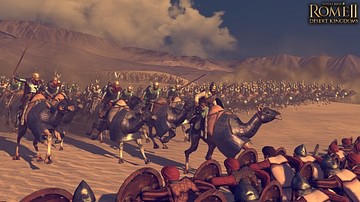
Kingdom of Saba
Saba (also given as Sheba) was a kingdom in southern Arabia (region of modern-day Yemen) which flourished between the 8th century BCE and 275 CE when it was conquered by the neighboring Himyarites. Although these are the most...

Definition
Ninurta - The Sumerian Hero-God of War
Ninurta (identified with Ningirsu, Pabilsag, and the biblical Nimrod) is the Sumerian and Akkadian hero-god of war, hunting, and the south wind. He first appears in texts in the early 3rd millennium BCE as an...
Definition
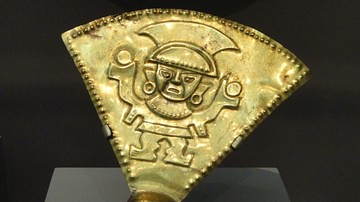
Chimu Civilization
The Chimu civilization, otherwise called the kingdom of Chimor, flourished on the northern coast of Peru between the 12th and 15th centuries CE. With their capital at Chan Chan, the Chimu were the largest and most prosperous...
