
Search
Search Results

Image
Imperial Crown of India
The Imperial Crown of India, worn by King George V (r. 1910-1936) at the Delhi Durbar of 1911. The crown is notable for the square emerald in the top cross and it is studded with over 6,000 diamonds. (Tower of London)

Image
Kublai Khan Naming Phakpa Imperial Preceptor
Kublai (Qubilai) Khan Naming Phakpa Imperial Preceptor, c. 1270 CE; attributed to Khyentse Chenmo (flourished 1450s–1490s CE); Tibet; late 15th–16th century CE; pigments on cloth; 32 1/4 x 20 in. (82.6 x 50.8 cm); Art Gallery of Greater Victoria...
Image
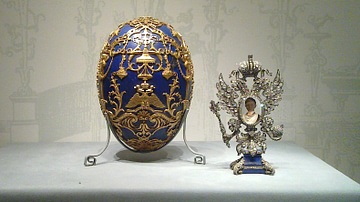
Imperial Tsarevich Egg by Fabergé
The 1912 Imperial Tsarevich Egg by Peter Carl Fabergé (1846-1920). The egg was given by Tsar Nicholas II (r. 1894-1917) to his wife Alexandra Feodorovna. The egg is made of gold and six lapis lazuli sections with diamond decoration. The latticework...
Image
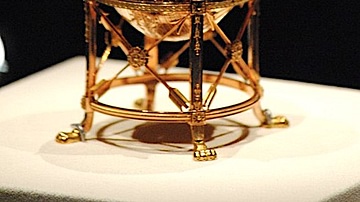
Imperial Pelican Egg by Fabergé
The 1898 Imperial Pelican Egg by Peter Carl Fabergé (1846-1920). The egg was given by Tsar Nicholas II (r. 1894-1917) to his mother the Dowager Empress Marie Feodorovna. It commemorates the 100th anniversary of the charitable institutions...

Image
Imperial Napoleonic Egg by Fabergé
The 1912 Imperial Napoleonic Egg by Peter Carl Fabergé (1846-1920). The egg was given by Tsar Nicholas II (r. 1894-1917) to his mother the Dowager Empress Marie Feodorovna. It commemorated the 100th anniversary of the Russian wars against...

Image
Imperial Red Cross Egg by Fabergé
The 1915 Imperial Red Cross Egg by Peter Carl Fabergé (1846-1920). The egg was given by Tsar Nicholas II (r. 1894-1917) to his mother the Dowager Empress Marie Feodorovna. It commemorates the dowager's role as head of the Russian Red Cross...
Image
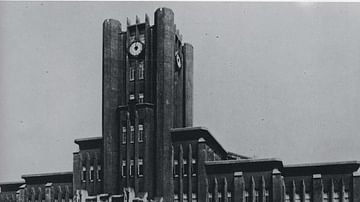
Tokyo Imperial University
Tokyo Imperial University, 1925.
Image
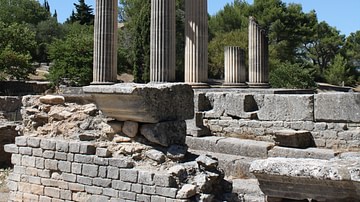
Temple of the Imperial Cult, Glanum
The faithfully reconstructed corner of the smaller of two twin temples dedicated to the imperial cult at Glanum, southern France. c. 20 BCE.
Image
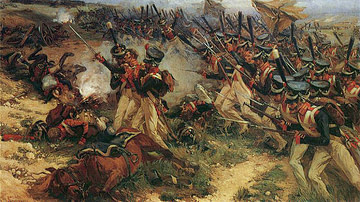
Attack of the Russian Imperial Guard at Borodino
Attack of the Russian Imperial Guard during the Battle of Borodino (7 September 1812). The regiment would lose 973 out of its original 1740 men during the battle. By N. S. Samokish, 1912.

Image
Twin Imperial Temples, Glanum
The remains of the twin temples dedicated to the imperial cult at Glanum, southern France. c. 20 BCE. The corner of the smaller temple has been faithfully reconstructed based on damged original finds.
