
Search
Did you mean: Tomb?
Remove Ads
Advertisement
Search Results
Image
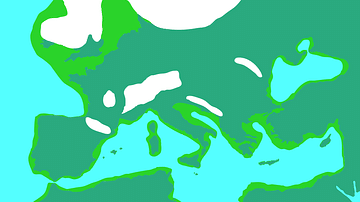
Europe During the Last Glacial Maximum
Europe during the most recent glacial, in which the ice sheets reached peak growth between c. 26.500 to c. 19,000 years ago. This is known as the Last Glacial Maximum. Sea levels were lower than today.

Image
Young Woolly Mammoth Carcass
This carcass of a young woolly mammoth, nicknamed 'Yuka', is on display in Moscow after being found in an astonishingly good condition in Siberia. It died around 39,000 years ago and was between 6 and 11 years old.
Image
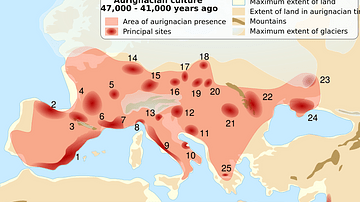
Aurignacian Sites
Map showing sites and presence associated with the Aurignacian culture, usually attributed to the first modern humans who arrived in Europe around 45,000 years ago.
Image
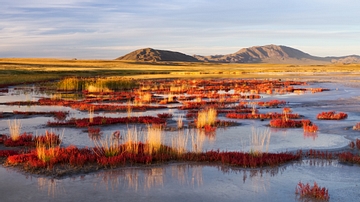
Mammoth Steppe
The Ubsunur Hollow Biosphere Reserve, depicted here, contains some of the last stretches of the so-called mammoth steppe; an ecosystem in which the woolly mammoth thrived during the Pleistocene.
Image
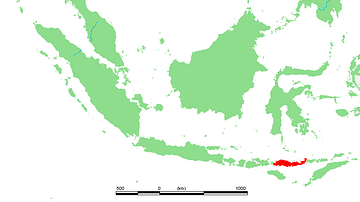
Location of the Island of Flores, Indonesia
Location of the island of Flores, Indonesia (highlighted in red).
Image
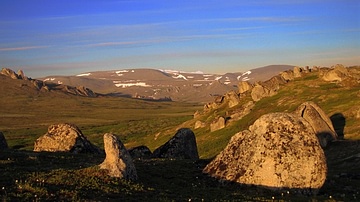
Bering Land Bridge Natural Preserve
Bering Land Bridge Natural Preserve. Many parts of this area look similar to how it may have looked when the first humans arrived there, perhaps around 30,000 years ago. From there on, early humans may have crossed to the Americas by around...

Image
Drawings of Middle Palaeolithic Tools: Points & Scrapers
Drawings of stone tools belonging to the Middle Palaeolithic (sometimes called 'Mousterian') industries, found from Europe and the Near East to Africa between approximately 250,000 and 30,000 years ago. It is associated with archaic homo...

Image
Geographical Range of Neanderthals
The geographical range of Homo neanderthalensis.

Video
First Peoples Australia
When Homo sapiens arrived in Australia, they were, for the first time, truly alone, surrounded by wildly different flora and fauna. How did they survive and populate a continent? There is a close cultural and genetic link between the First...
