
Search
Remove Ads
Advertisement
Search Results

Definition
Philippi
Philippi was an important city in eastern Macedon which flourished in the Hellenistic, Roman, and Byzantine Periods. Situated between the Strymon and Nestos rivers, the city was valued in antiquity for its nearby gold mines. Site of...

Definition
Motte and Bailey Castle
The motte and bailey castle was an early form of medieval fortification especially popular with the Normans in northern France and Britain during the 11th century CE. A single tower was built on (or partially within) the...

Definition
Plebeians
Plebeians were members of the plebs, the hereditary social class of commoners in ancient Rome. Their exclusion from political power by the patricians, who claimed to be the descendants of the first senators, led to Conflict of the...
Definition
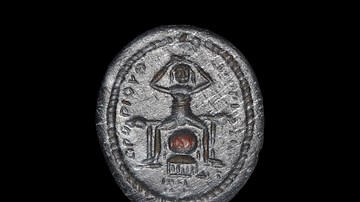
Eileithyia
Eileithyia (or Ilithyia) was the goddess of childbirth in Greek mythology, with the power to either help or hinder childbirth. She most famously played a role in the birth of Hercules and Apollo. Eileithyia was the daughter of Zeus...

Article
Elephants In Ancient Indian Warfare
Elephants were used in the ancient Indian army, irrespective of regions, dynasties, or points in time; their importance was never denied and continued well into the medieval period as well. The ready availability...

Image
Map of Battle of Gettysburg, 1–3 July 1863 - Lee’s Invasion and the Civil War’s Turning Point
The Battle of Gettysburg (1–3 July 1863) was the bloodiest engagement of the American Civil War (1861–1865) and the decisive battle of Confederate General Robert E...

Article
Siege of Yorktown
The Siege of Yorktown (28 September to 19 October 1781) was the final major military operation of the American Revolutionary War (1775-1783). It resulted in the surrender of British general Lord Charles Cornwallis, whose army...

Article
Ten Great Native American Mound Sites
The Native Americans of Pre-Colonial North America built thousands of mounds across the continent which served various purposes and sometimes reached heights over 100 feet. Many of the mound sites were thriving...

Article
The Boy Who Saw A-ti'us
The Boy Who Saw A-ti'us is a legend of the Pawnee nation about a young man who is granted a vision of the Creator Ti-ra'wa A-ti'us (also known simply as Ti-ra'wa or as A-ti'us) and, through his faith, is able to see what...

Article
Nih'a'ca Tales
Nih'a'ca tales are Arapaho legends concerning the trickster figure Nih'a'ca, who, according to Arapaho lore, is the first haxu'xan (two-spirit), a third gender, often highly regarded by many Native American nations, including the...
