
Search
Remove Ads
Advertisement
Search Results
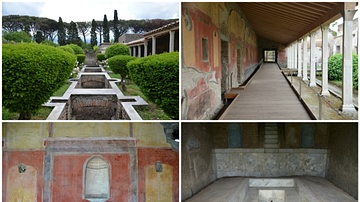
Image
Water Garden of the Praedia of Julia Felix in Pompeii
View of the garden area of the Praedia (estate) of Julia Felice in Pompeii. The large complex of properties was formed after the earthquake of 62 CE by incorporating previous buildings into a single urban villa. Its owner, Julia Felix, converted...
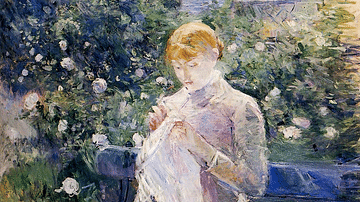
Image
Pasie Sewing in Bourgival's Garden by Morisot
An 1881 oil on canvas painting, Pasie Sewing in Bourgival's Garden, by Berthe Morisot (1841-95), the French impressionist painter. Pasie was the artist's maid and the nanny of her daughter. The tones of lilac and brushstrokes are typical...

Image
Garden of the Fullonica of Stephanus
The garden area of the Fullonica of Stephanus, which had been converted to the drying area of the laundry, Pompeii.
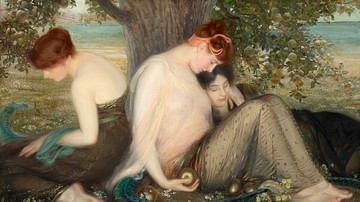
Image
Garden of Hesperides
Garden of Hesperides, oil on canvas by Albert Herter, 19th century.
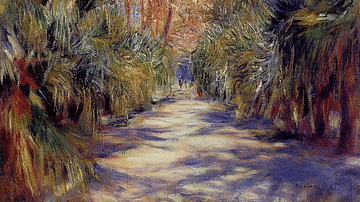
Image
The Garden of Essai by Renoir
An 1881 oil on canvas landscape, The Garden of Essai, by Pierre-Auguste Renoir (1841-1919) the French impressionist painter. Painted in Algiers. (Private Collection)
Image
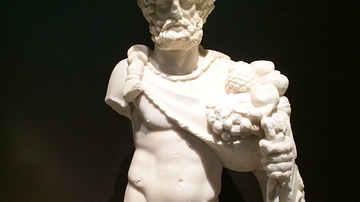
Garden Statuette of Silvanus
This statuette of the Roman god Silvanus dates from the 1st century CE, and it is made from marble. In ancient times, the garden represented a tamed space — a small-scale version of nature. Its fertility and abundance spoiled over into the...
Image
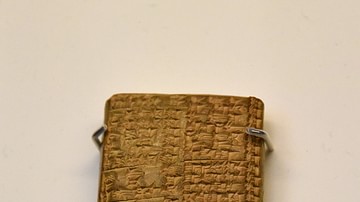
List of Plants in the Garden of Marduk-apla-iddina
This tablet lists the plants in the garden of King Marduk-apla-iddina, the Biblical Merodach-Baladan, including onions, garlic, leeks, lettuce, cucumbers, and turnips, as well as mint, cress, thyme, and coriander. The plant called "slave...
Image
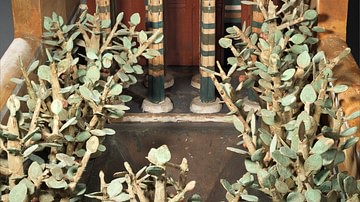
Model of an Egyptian House with Garden
Model of an ancient Egyptian house with a front garden. From the tomb of Meketre in Thebes, Egypt c. 1981-1975 BCE.
Metropolitan Museum of Art, New York.
Image
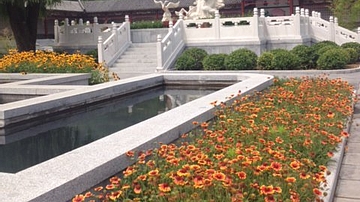
Mao's Garden at the Great Wall of China
Mao's Garden at the Great Wall of China. The reflecting pool in the center represents eternity while the flowers in bloom around it symbolize people's lives on earth which appear to make the world beautiful and then fade and die and are replaced...
Image
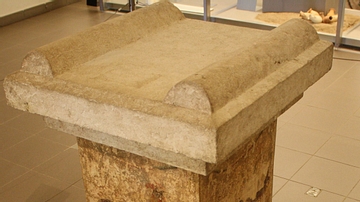
Roman Garden Altar, Empuries
A marble altar from the garden of a private Roman home in Empuries (Emporiae). 1st century CE, domus 2B. The sides are decorated with painted scenes of a cockerel and, on the reverse side, a two-handled glass vessel containing a pineapple...
