
Search
Remove Ads
Advertisement
Search Results
Article
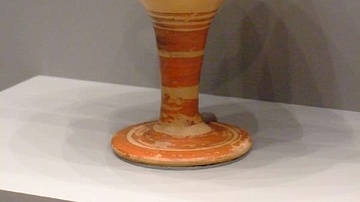
Mycenaean Pottery
The pottery of the Mycenaean civilization (1550-1050 BCE), although heavily influenced by the earlier Minoans based on Crete, nevertheless, added new pottery shapes to the existing range and achieved its own distinctive decorative...

Article
Social, Political & Economic Landscapes in Kautilya's Arthashastra
The Arthashastra (or Arthaśāstra) is one of the oldest surviving treatises on statecraft. There is considerable debate about the dating and authorship of the text; it underwent compilation...

Article
North Africa During the Classical Period
Phoenician traders arrived on the North African coast around 900 B.C. and established Carthage (in present-day Tunisia) around 800 B.C. By the sixth century B.C., a Phoenician presence existed at Tipasa (east...

Image
Tomb Relief of Amenhotep III
This limestone relief of the Egyptian pharaoh Amenhotep III (c. 1386-1353 BCE) came from the Tomb (TT57) of Khaemhat at Western Thebes (in modern-day Sheikh Abd el-Qurna), Egypt. Amenhotep III was depicted in profile...
Image
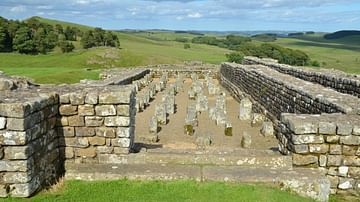
Housesteads Roman Fort, Granaries
The north granary of Housesteads Roman Fort (Vercovicium). All Roman forts had granaries (horrea) to store sufficient supplies for the garrison and for soldiers out on campaign. The granaries of Housesteads Roman...
Image
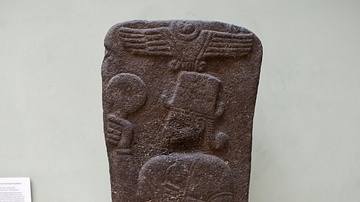
Hittite Basalt Stela Showing Goddess Kubaba
The upper part is a freestanding basalt monument depicting the goddess Kubaba, consort of the storm god Teshub, and one of the most important deities at Carchemish. She holds a mirror and pomegranate, symbols...
Image
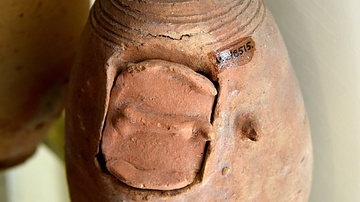
Lamp From Diopolis Parva
This is a redware pottery lamp which was done in the form of a granary with a separate door. It has a red slip on the door and around. From Diopolis Parva, Egypt. 2nd Intermediate Period, 1650-1550 BCE. The Petrie Museum...
Image
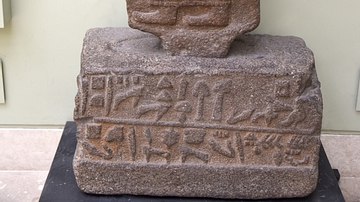
Goddess Kubaba
This image shows two objects: The free-standing basalt stele depicts the goddess Kubaba, consort of the storm god Teshub, and one of the most important deities at the city of Carchemish. Kubaba stands below a winged-disc and...
Article
Harappan Cities
The most striking feature of the Harappan cities is their town planning. The Harappan city was divided into the upper town (also called the Citadel) and the lower town. The various features of the Harappan town planning is given...
