
Search
Remove Ads
Advertisement
Search Results
Image
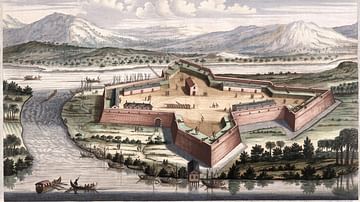
Bird's Eye View of the Fort of Batticaloa
Bird's eye view of the fort of Batticaloa, copperplate printing on paper by Johannes Janssonius Waasbergen, c. 1665.
Nationaal Archief, The Hague.
Image
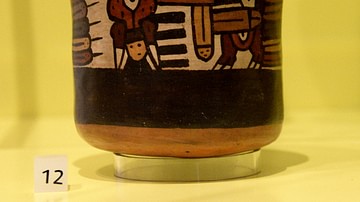
Nazca Bowl with Bird Monster
Late Nazca vessel depicting a bird monster, from Nasca, Peru, 400-500. The subject is depicted in profile and there is a use of complex and repeated motifs. This artistic development preceded the decline of a discernible...
Image
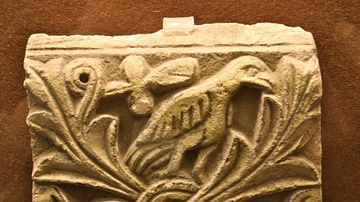
Roman Bird Frieze
This limestone frieze was likely made somewhere in the Eastern Roman Empire in the 5th century CE. It depicts a hungry bird pecking a vine. (Musée du Cinquantenaire, Brussels)
Article
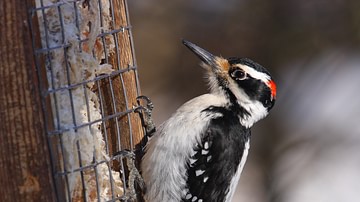
The Woodpecker's Mother-in-Law
The Woodpecker's Mother-in-Law is a Cheyenne tale which, like any other, is open to various interpretations but, among them, highlights the strength and autonomy of Cheyenne women. The old woman and her daughter each...

Definition
Windsor Castle
Windsor Castle is located in Berkshire, England, and was built as a motte and bailey castle by William the Conqueror (r. 1066-1087). Converted into stone by Henry II of England (r. 1165-1179), the shell keep tower was rebuilt by...

Article
Cheyenne Creation Story
The Cheyenne Creation Story is the account of the beginning of the world, the seasons, and the first people in the time before time when all was water, and nothing existed but the Creator and aquatic birds. There are many...

Image
Horus Bird Statuette
Small statue of Horus.
Staatliches Museum Ägyptischer Kunst (State Museum of Egyptian Art), Munich.
Image
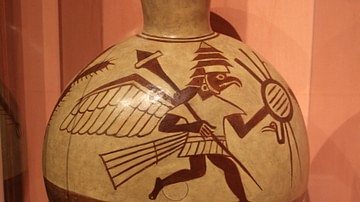
Moche Vessel Depicting Bird Warriors
Winged and armed gods from the Moche Florescent Epoch (1 CE - 800 CE). From Museo Larco, Lima, Peru.
Image
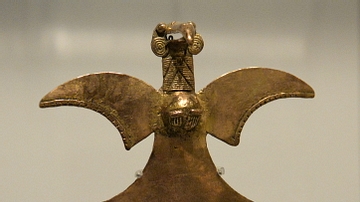
Bird-shaped Gold Pectoral from Costa Rica
At home on land or water and in the air, birds are important to art and mythology. They often symbolize the flight of soul up to heaven. From Costa Rica, South America, 11th to 16th century CE. (National Museum...
Image
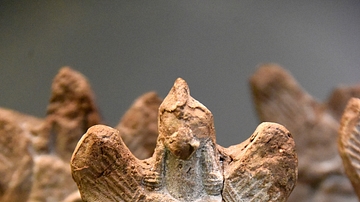
Bird-headed Apkallu for Home Protection
In order to protect the household, these protective figures (apkallu or sage) would be buried beneath the floor in groups of seven. From Nimrud, Northern Mesopotamia, Iraq. Neo-Assyrian Period, 900-612 BCE...
