
Search
Remove Ads
Advertisement
Search Results

Definition
Medes
The Medes or Medians were a group of Indo-Iranian-speaking people from central Asia who migrated westwards and entered northern Iran around the end of the 2nd millennium BCE. They settled in the highlands of Zagros (Zagreus in Greek...

Definition
Glanum
Glanum, located near St-Rémy-de-Provence in southern France, was a Greek and then Roman town which prospered due to its location on trading routes between Italy and the Rhodanus (Rhone River). The town benefitted from a large building...
Definition
Chimu Civilization
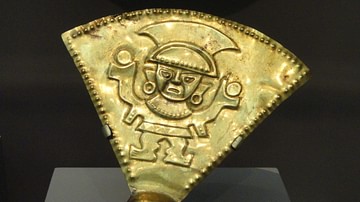
The Chimu civilization, otherwise called the kingdom of Chimor, flourished on the northern coast of Peru between the 12th and 15th centuries CE. With their capital at Chan Chan, the Chimu were the largest and most prosperous...
Article
The Archaeological Excavations at Magdala
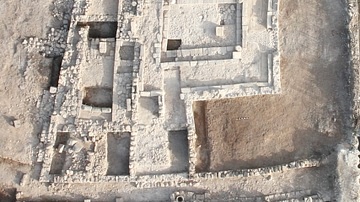
Magdala, known as Migdal in Hebrew (מִגְדָּל: tower) and also as Taricheae (Ταριχέα, from the Greek Τάριχος or tarichos: preserved by salting or drying fish), was an important fishing town during the first...
Article
Visitor’s Guide to Carsulae (San Damiano)
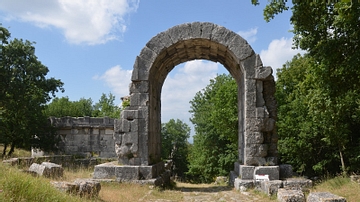
Carsulae in Umbria, central Italy, was founded c. 300 BCE and only became a prosperous urban centre after it was connected by the Via Flaminia towards the end of the 3rd century BCE. It was granted the status...

Article
Roman Mosaics
Roman mosaics were a common feature of private homes and public buildings across the empire from Africa to Antioch. Not only are mosaics beautiful works of art in themselves but they are also an invaluable record of such everyday...

Article
Nazca Lines
The Nazca civilization flourished in southern Peru between 200 BCE and 600 CE and amongst their most famous legacies are the geoglyphs and lines - often referred to as Nazca Lines - along the eastern coast of Peru and northern Chile...

Article
Minoan Frescoes
Frescoes are the source of some of the most striking imagery handed down to us from the Minoan civilization of Bronze Age Crete (2000-1500 BCE). Further, without written records, they are often the only source, along with decorated...

Interview
Interview with Illustrator Flora of Flaroh Illustration
Join World History Encyclopedia as they chat with Flora of Flaroh Illustration, a freelance illustrator who loves to create art inspired by archaeological artefacts and myths. Kelly (WHE): What...

Image
Jomon pottery
Deep pot (32 cm high) with impressed decoration from the Middle Jomon Period.
