
Search
Did you mean: Bes?
Remove Ads
Advertisement
Search Results
Article
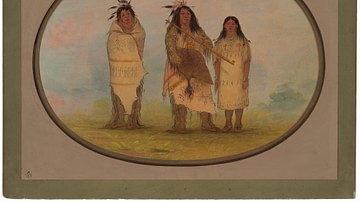
The Life and Death of Sweet Medicine
The Life and Death of Sweet Medicine is a Cheyenne tale of the great prophet and law-giver Sweet Medicine who received the sacred Four Arrows, structure of government, and rules of society from Maheo, the Wise One Above, and predicted the...

Article
Henry IV of France & the Edict of Nantes
Henry of Navarre became the nominal ruler of France after the assassination of Henry III of France (r. 1574-1589), whose marriage to Louise de Lorraine produced no heir. After years of attempts to deny the throne to Navarre, his enemies realized...
Article
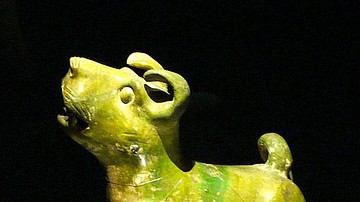
Dogs in Ancient China
Dogs are the oldest domesticated animal in China and were bred as guardians, for transporting goods, for herding, hunting, and as a food source. Archaeological evidence dates the domestication of the dog in China at approximately 15,000 years...

Article
Lokasenna
The poem Lokasenna belongs to the Poetic Edda, a bulk of Old Norse poetry written down in Iceland in the 1200s but based on linguistic features dating back as far as the 900s. In this invaluable resource for Norse mythology, Lokasenna stands...

Article
The Poems of Christopher Marlowe
Christopher Marlowe (1564-1593), also known as Kit Marlowe, was one of the most influential dramatists of Elizabethan theatre. Though he is best known for his plays, his poems were very popular in their time and are still well-regarded today...

Article
4 Lesser-Known Elizabethan Playwrights and Poets
The Elizabethan era is often regarded as a golden age for English culture, language, and literature. Though William Shakespeare, Christopher Marlowe, Ben Jonson, and Edmund Spenser are amongst the best remembered writers of this era, many...

Article
Poor Man of Nippur
The Poor Man of Nippur (c. 701 BCE) is a Babylonian poem on the themes of the obligations of hospitality and revenge for an undeserved injury. A poor man of the city of Nippur feels mistreated when he visits the mayor and then goes to great...

Article
Autobiography of Saint Ignatius of Loyola
The Autobiography of Saint Ignatius is the story of the life of Ignatius of Loyola (l. 1491-1556) dictated by him to the Jesuit priest Father Louis Gonzalez between 1553-1555, shortly before Loyola's death in 1556. It is an account of his...

Article
Top 5 Historic Day Trip Sites to Visit Close to Dublin
Ireland is filled with historical sites and monuments. The 'Emerald Isle' always has something new in store for those who venture there and are eager to learn about its fascinating past. Many sites have a mystical past told through legends...

Article
Yellow Hair: George Armstrong Custer
Yellow Hair: George Armstrong Custer is the Cheyenne and Arapaho account of Lt. Colonel George Armstrong Custer (l. 1839-1876), his interaction with the Southern Cheyenne Chief Black Kettle (l. c. 1803-1868), the Washita Massacre (27 November...
