
Search
Remove Ads
Advertisement
Search Results
Definition
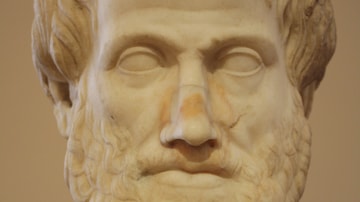
Aristotle
Aristotle of Stagira (l. 384-322 BCE) was a Greek philosopher who pioneered systematic, scientific examination in literally every area of human knowledge and was known, in his time, as "the man who knew everything" and later simply...

Definition
Nephthys
Nephthys was one of the original five gods of ancient Egypt born of the union of Geb (earth) and Nut (sky) after the creation of the world. She was the fourth born after Osiris, Isis, and Set and was the older sister of Horus (usually...

Definition
Troy
Troy is the name of the Bronze Age city attacked in the Trojan War, a popular story in the mythology of ancient Greece, and the name given to the archaeological site in the north-west of Asia Minor (now Turkey) which has revealed a large...

Definition
Twelve Tables
The Twelve Tables (aka Law of the Twelve Tables) was a set of laws inscribed on 12 bronze tablets created in ancient Rome in 451 and 450 BCE. They were the beginning of a new approach to laws which were now passed by government...
Definition
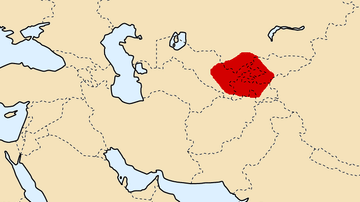
Sogdiana
Sogdiana (or Sogdia) is a region in Central Asia between the mighty rivers Iaxartes in the north and Oxus in the south. Its eastern and western limits are more difficult to determine, especially since the toponym Sogdiana covered different...

Definition
Chinese Writing
Ancient Chinese writing evolved from the practice of divination during the Shang Dynasty (1600-1046 BCE). Some theories suggest that images and markings on pottery shards found at Ban Po Village are evidence of an early writing...

Definition
Burial
Burial of the dead is the act of placing the corpse of a deceased person in a tomb constructed for that purpose or in a grave dug into the earth. Archaeological excavations have revealed Neanderthal graves dating back 130,000 years, marking...

Definition
Apophis
Apophis (also known as Apep) is the Great Serpent, enemy of the sun god Ra, in ancient Egyptian religion. The sun was Ra's great barge which sailed through the sky from dawn to dusk and then descended into the underworld. As it sailed...

Definition
Mythology
Myths are a part of every culture in the world and are used to explain natural phenomena, where a people came from and how their civilization developed, and why things happen as they do. At their most basic level, myths comfort by...

Definition
Dhammapada
Tipitaka (Sansktrit: Tripitaka), the Buddhist canon, consists of three pitaka (Tri means three and Pitaka refers to boxes), namely Vinaya or Monastic regimen, Sutta (Sanskrit: Sutra) or Discourses and Abhidhamma (Sanskrit: Abhidharma...
