
Search
Remove Ads
Advertisement
Search Results

Definition
Ancient China
Ancient China produced what has become the oldest extant culture in the world. The name 'China' comes from the Sanskrit Cina (derived from the name of the Chinese Qin Dynasty, pronounced 'Chin') which was translated as 'Cin' by...

Definition
Hernán Cortés
Hernán Cortés (1485-1547) was a Spanish conquistador who led the conquest of the Aztec Empire in Mexico from 1519. Taking the Aztec capital of Tenochtitlan in 1521, Cortés plundered Mesoamerica as he became the first ruler of the...

Definition
Seneca
Lucius Annaeus Seneca (Seneca the Younger, l. 4 BCE - 65 CE) was a Roman author, playwright, orator, and most importantly a tutor and advisor to the Roman emperor Nero (r. 54-68 CE). Influenced by Stoic philosophy, he wrote several philosophical...
Definition
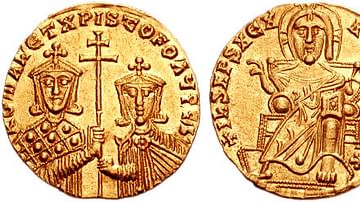
Romanos I
Romanos I Lekapenos (“the Ignorant”) was emperor of the Byzantine Empire from 920 to 944 CE. Of Armenian descent, he was a military commander who usurped the throne to rule as co-emperor with the rightful heir, but still minor, Constantine...

Definition
Knights Templar
The Knights Templar were established c. 1119 and given papal recognition in 1129. It was a Catholic medieval military order whose members combined martial prowess with a monastic life to defend Christian holy sites and pilgrims...

Definition
Great Hall
The Great Hall was the architectural centrepiece of a medieval castle's interior and functioned as the social and administrative hub of the castle and its estates. With everyone dining and sleeping in the hall in its early days, the...

Definition
Hanseatic League
The Hanseatic League (also known as Hansa, Hanse, 1356-1862 CE) was a federation of north German towns and cities formed in the 12th century CE to facilitate trade and protect mutual interests. The league was centered in the German...

Definition
Robert the Bruce
Robert I of Scotland, better known as Robert the Bruce, reigned as King of Scotland from 1306 to 1329 CE. For his role in achieving independence from England, Robert the Bruce has long been regarded as a national hero and one...

Definition
Edward VI of England
Edward VI of England reigned as king from 1547 to 1553 CE. Succeeding his father Henry VIII of England (r. 1509-1547 CE), Edward was only nine years old at the time and so the kingdom was ruled by a council of nobles, foremost...

Definition
Tsar
Tsar (also czar) is a Slavic term derived from the Latin caesar. Ivan III (Ivan the Great) (r. 1462-1505) was the first Russian ruler to begin using the title of tsar during his reign instead of the title Grand Prince of Moscow. His grandson...
