
Search
Did you mean: Emperor Zeno?
Remove Ads
Advertisement
Search Results

Definition
Emperor Taizu of Song
Emperor Taizu (960-976 CE), formerly known as Zhao Kuangyin, was the founder of the Song (aka Sung) dynasty which ruled China from 960 to 1279 CE. Taizu settled for a territorially smaller but more unified and prosperous China than was seen...
Definition
Emperor Wuzong of Tang
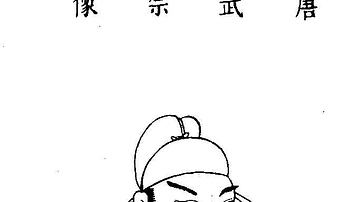
Wuzong of Tang (also Wu-Tsung, formerly Li Yan) reigned as emperor of China from 840 to 846 CE. He is best remembered today for his persecution of Buddhists, the worst such attack in all of China's history, and his early death by insanity...

Definition
Qin Dynasty
The Qin Dynasty (221-206 BCE) was the first dynasty of Imperial China (defined as the era of centralized, dynastic government in China between 221 BCE and 1912 CE) which united the separate states following the Warring States Period (c. 481-221...

Definition
Sui Dynasty
The Sui Dynasty (581-618 CE) was a brief one with only two reigning emperors but it managed to unify China following the split of the Northern and Southern Dynasties period. As had happened previously in Chinese history, a short-lived dynasty...

Article
Emperor Titus' Sole Mistake - A Mysterious Deathbed Confession
A little over two years into his imperial administration, the Roman emperor Titus (r. 79-81 CE) and a retinue of followers traveled to the Sabine countryside for a respite. As they made the overland journey, Titus quickly realized something...

Definition
Shi Huangdi
Shi Huangdi (l.259-210 BCE/r.221-210 BCE, also known as Qin Shi Huang, Qin Shih Huandi, Shi Huangti or Shih Huan-ti) was the first emperor of a unified China. Shi Huangdi means `First Emperor' and is a title, not a proper name. The Qin Dynasty...

Article
Marcus Aurelius: Philosopher Emperor or Philosopher-King?
Co-authored by Steven Umbrello and Tina Forsee It is very common to hear in both academic circles, as well as more close-knit Stoic circles, Marcus Aurelius (121 – 180 CE) being referred to as the philosopher king. This is not an idea...

Definition
Sima Qian
Sima Qian (l. 145/135-86 BCE) was a court scribe, astrologer, and historian of the Han Dynasty (202 BCE - 220 CE) of ancient China, famous for his historical work Records of the Grand Historian for which he is remembered as the Father of...

Definition
Bai Juyi
Bai Juyi (l. 772-846) was one of the greatest poets of the Tang Dynasty (618-907) along with Li Po (l. 701-762) and Du Fu (l. 712-770). He was a government official who got in trouble with authorities a number of times for not following the...

Definition
Mandate of Heaven
The Mandate of Heaven (Tianming), also known as Heaven's Mandate, was the divine source of authority and the right to rule of China's early kings and then emperors. The ancient god or divine force known as Heaven or Sky selected a particular...
