
Search
Did you mean: Dacia?
Remove Ads
Advertisement
Search Results

Article
Food & Drink in the Elizabethan Era
Food and drink in the Elizabethan era was remarkably diverse with much more meat and many more varieties of it being eaten by those who could afford it than is the case today. Storage of food was still a problem...

Article
Origins of World Agriculture
Agriculture arose independently at several locations across the world, beginning about 12,000 years ago. The first crops and livestock were domesticated in six rather diffuse areas including the Near East, China, Southeast...

Article
Nazca Lines
The Nazca civilization flourished in southern Peru between 200 BCE and 600 CE and amongst their most famous legacies are the geoglyphs and lines - often referred to as Nazca Lines - along the eastern coast of Peru and northern Chile...

Article
Thanksgiving Day: A Brief History
The United States holiday of Thanksgiving is generally understood to be inspired by the harvest feast celebrated by the citizens of Plymouth Colony (later known as pilgrims) and the Native Americans of the Wampanoag...
Article
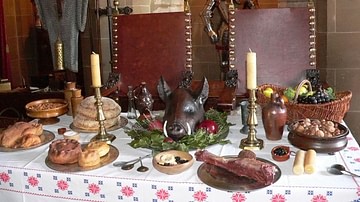
Food in an English Medieval Castle
If one was looking to enjoy a fine meal in the medieval world then the best place to find a handsomely laid dinner table was in the local castle. There, in the magnificent Great Hall, feasts were regularly served...

Article
A Medieval Christmas - A History of Seasonal Traditions
Christmas was one of the highlights of the medieval calendar, not only for the rich but also for the peasantry. For the longest holiday of the year, typically the full twelve days of Christmas, people...

Article
Song of Everlasting Sorrow
The Song of Everlasting Sorrow is a narrative poem of the Tang Dynasty (618-907 CE) inspired by the love affair between Xuanzong (r. 712-756 CE), the seventh emperor of the dynasty, and his consort Lady Yang. It was written...

Article
Iktomi Tales
Iktomi (also known as Unktomi) is a trickster figure of the lore of the Lakota Sioux nation similar to tricksters of other nations, such as Wihio of the Cheyenne, Nanabozho (Manabozho) of the Ojibwe, Coyote of the Navajo, or Glooscap...

Article
Elephants In Ancient Indian Warfare
Elephants were used in the ancient Indian army, irrespective of regions, dynasties, or points in time; their importance was never denied and continued well into the medieval period as well. The ready availability...
Article
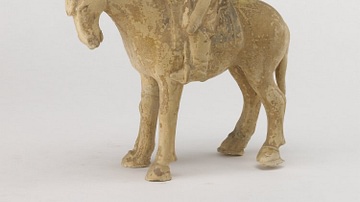
Archers in Ancient Chinese Warfare
The bow was the most common weapon in ancient Chinese warfare and the skill of using it was the most esteemed martial art for millennia. Archers were used as infantry, chariot riders, and cavalry over the centuries...
