
Search
Did you mean: Diomedes?
Remove Ads
Advertisement
Search Results
Image
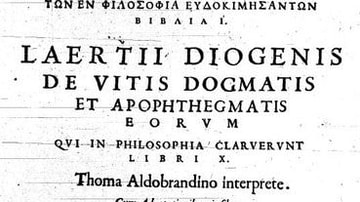
Diogenes Laërtius: Lives and Opinions of Eminent Philosophers
Title page from 1594 edition of Diogenes Laërtius' "Lives and Opinions of Eminent Philosophers."

Definition
Hipparchia of Maroneia
Hipparchia of Maroneia (l. c. 350-280 BCE) was a Cynic philosopher who rejected her upper-class life to live her beliefs and share her values on the streets of ancient Athens. She was the wife of the Cynic Crates of Thebes (l. c. 360-280...

Definition
Antisthenes of Athens
Antisthenes of Athens (l. c. 445-365 BCE) was a Greek philosopher who founded the Cynic School. He was a follower of Socrates and appears in Plato's Phaedo as one of those present at Socrates' death. He is also one of the primary interlocutors...

Definition
Crates of Thebes
Crates of Thebes (l. c. 360-280 BCE) was one of the most important Cynic philosophers of ancient Greece. He was born to a wealthy family in Thebes but gave away his inheritance after realizing the futility of material possessions. He then...

Article
Hipparchia the Cynic: Devoted Wife, Mother, & Outspoken Greek Philosopher
Cynic philosopher, wife of Crates of Thebes (l. c. 360 – 280 BCE), and mother of his children, Hipparchia of Maroneia (l. c. 350 – 280 BCE) defied social norms in order to live her beliefs. She is all the more impressive in that she taught...

Definition
Plato
Plato (l. 424/423 to 348/347 BCE) is the pre-eminent Greek philosopher, known for his Dialogues and for founding his Academy in Athens, traditionally considered the first university in the Western world. Plato was a student of Socrates and...

Definition
Periander
Periander was the second tyrant of Corinth (d. c. 587 BCE); Diogenes Laertius only mentions that he was eighty when he died, meaning that he was probably born c. 667 BCE. His father Cypselus (r. 657-627 BCE), from whom the short-lived Cypselid...
Definition
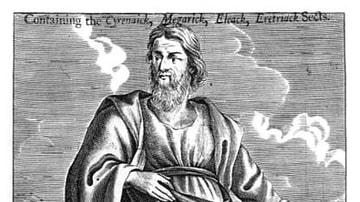
Aristippus of Cyrene
Aristippus of Cyrene (l. c. 435-356 BCE) was a hedonistic Greek philosopher who was one of Socrates' students and founder of the Cyrenaic School of philosophy which taught that pleasure and the pursuit of pleasure was the highest good and...

Definition
Zeno of Citium
Zeno of Citium (l. c. 336-265 BCE) was the founder of the Stoic school of philosophy in Athens, which taught that the Logos (Universal Reason) was the greatest good in life and living in accordance with reason was the purpose of human life...
Article
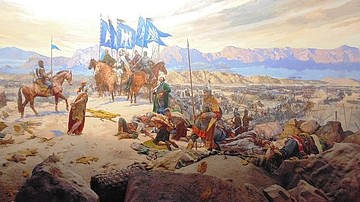
Battle of Manzikert
The Battle of Manzikert (Mantzikert) in ancient Armenia in August 1071 CE was one of the greatest defeats suffered by the Byzantine Empire. The victorious Seljuk army captured the Byzantine emperor Romanos IV Diogenes, and, with the empire...
