
Search
Remove Ads
Advertisement
Search Results

Definition
Richard II of England
Richard II of England reigned as king from 1377 to 1399 CE. The son of the late Edward the Black Prince (1330-1376 CE), Richard would succeed his grandfather Edward III of England (r. 1327-1377 CE), but as he was only 10 years of age, he...

Definition
Michel Foucault
Michel Foucault (1926-1984) was a post-modernist French philosopher and is considered one of the most influential philosophers of modern times. Aside from his critiques of social institutions, his influence can be seen in both the humanities...
Definition
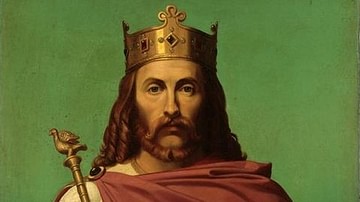
Chilperic I
Chilperic I (r. 561-584) was a king of the Merovingian Dynasty, who ruled over the Frankish kingdom of Neustria. During his reign, Chilperic was often occupied with civil wars against his brothers and intrigues by his own sons, conflicts...

Definition
Manuel I Komnenos
Manuel I Komnenos was emperor of the Byzantine Empire from 1143 to 1180 CE. Manuel continued the ambitious campaigns of his grandfather Alexios I and father John II to aggressively expand the boundaries of his empire. Manuel turned out to...

Definition
Odo of Bayeux
Odo of Bayeux (d. 1097 CE) was the bishop of Bayeux in Normandy and half-brother of William the Conqueror (r. 1066-1087 CE). After the Norman conquest of England in 1066 CE, Odo was given vast Anglo-Saxon estates and made, as the Earl of...
Definition
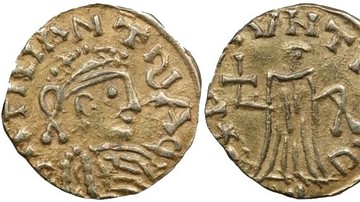
Guntram I of Orléans
Guntram I (also given as Gontrand, Gunthram, or Gunthchramn) was a Merovingian king who ruled over the Frankish kingdom of Orléans, later referred to as Burgundy, from 561 to 592. He often took on the role of mediator in the disputes between...

Definition
David II of Scotland
David II of Scotland ruled as king from 1329 to 1371 CE. Succeeding his father Robert the Bruce (r. 1306-1329 CE) when still a child, his early reign was threatened by the pretender Edward Balliol (c. 1283-1364 CE), son of King John Balliol...

Definition
John II Komnenos
John II Komnenos “the Handsome” was emperor of the Byzantine Empire from 1118 CE to 1143 CE. John, almost constantly on campaign throughout his reign, would continue the military successes of his father Alexios I with significant victories...

Image
Artemis / Diana
Statue of Artemis (Greek) or Diana (Roman), known as Diane de Versailles, France. Roman copy, 1st or 2nd century CE, of lost Greek bronze attributed to Leochares, c. 325 BCE. Musee du Louvre, Paris.

Image
Transfiguration of Christ
Transfiguration of Christ, painting by Fra Angelico, photograph by Sailko, Florence, 22 July, 2009. This fresco painted by Fra Angelico in Cell 6 at the Convent of San Marco in Florence, now the San Marco Museum, shows Christ standing on...
