
Search
Did you mean: Cheka?
Remove Ads
Advertisement

 This answer was generated by
Search Results

Definition
Jan Hus
Jan Hus (also John Huss, l. c. 1369-1415) was a Czech philosopher, priest, and theologian who, inspired by the work of John Wycliffe (l. 1330-1384) challenged the policies and practices of the medieval Church and so launched the Bohemian...

Definition
Antonín Dvořák
Antonín Dvořák (1841-1904) was a Czech composer best known for his symphonies, symphonic poems, operas, and chamber music. Dvořák's best-loved works include his 9th Symphony (From The New World), the American quartet, and his Slavonic...
Definition
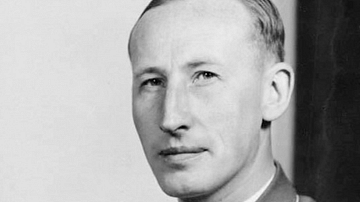
Reinhard Heydrich - The Infamous Head of Hitler's Reich Security
Reinhard Heydrich (1904-1942) was a lieutenant-general in the Nazi SS organisation, Gestapo chief, and head of Reich security. A favourite of Adolf Hitler (1889-1945), Heydrich controlled...

Definition
Bohemian Reformation
The Bohemian Reformation (c. 1380 to c. 1436) was the first concerted effort by Catholic clergy to reform the abuses and corruption of the medieval Church. Bohemian clerics and theologians called for reform and, like later...

Definition
Jan Žižka
Jan Žižka (l. c. 1360 – 1424) was a Czech general and one of the most brilliant tacticians in military history. In the Hussite Wars (1419 to c. 1434), he was undefeated as the leader of the Hussites against the Catholic loyalists...

Definition
Russian Civil War - The Failed Fightback Against Bolshevism
The Russian Civil War (1917-22) began shortly after the Bolshevik Revolution of November 1917. The Bolsheviks (the Reds) immediately found themselves in conflict with various opposition forces...

Definition
Oppidum - The Hilltop Fort of the Celts
Celtic hilltop forts, often called oppida (sing. oppidum), after the Latin name given to larger settlements by the Romans, were built across Europe during the 2nd and 1st century BCE. Surrounded by a fortification...

Definition
Indo-European Languages
The Indo-European languages are a family of related languages that today are widely spoken in the Americas, Europe, and also Western and Southern Asia. Just as languages such as Spanish, French, Portuguese and Italian are...

Definition
Thirty Years' War
The Thirty Years’ War (1618-1648) was the last major European conflict informed by religious divisions and one of the most devastating in European history resulting in a death toll of approximately 8 million. Beginning as a local...
Definition
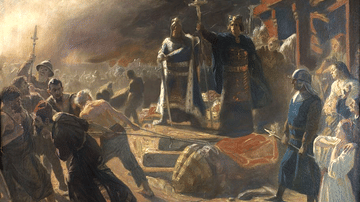
Slavs
The term "Slavs" designates an ethnic group of people who share a long-term cultural continuity and who speak a set of related languages known as the Slavic languages (all of which belong to the Indo-European language family). Little...
