
Search
Remove Ads
Advertisement
Search Results
Definition
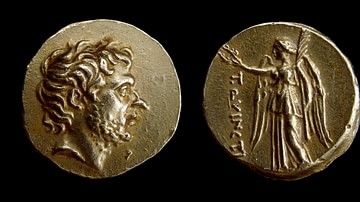
Titus Quinctius Flamininus
Titus Quinctius Flamininus (229-174 BCE) was a consul and military commander of the Roman Republic during the Second Macedonian War, who decisively defeated Philip V of Macedon (r. 221-179 BCE) at the Battle of Cynoscephalae...

Article
Caesar As Dictator: His Impact on the City of Rome
Gaius Julius Caesar (100-44 BCE) first assumed the role of dictator in 49 BCE, however, once he had secured his election as consul for the following year, he resigned after 11 days. After defeating...

Article
Pliny the Younger on Christianity
Pliny the Younger's (61-112 CE) letter (Epistulae X.96) to Roman Emperor Trajan (r. 98-117 CE) is one of our earliest sources on Christianity from an outsider's point of view. It highlights the Christian movement's...

Article
Julius Caesar: The Faults Behind the Myth
Last March marked the anniversary of Julius Caesar's assassination over 2,000 years ago, and after two millennia, his legendary achievements still linger in today's consciousness just as they have for centuries...

Article
Lucius Cornelius Sulla: Guardian or Enemy of the Roman Republic?
For centuries, Lucius Cornelius Sulla has been reviled as a maniacal tyrant who defiled the Roman constitution and instituted bloody purges, but some modern historians assert that he has...

Definition
Roman Republic
In the late 6th century BCE, the small city-state of Rome overthrew the shackles of monarchy and created a republican government that, in theory if not always in practice, represented the wishes of its citizens. From this basis...

Definition
Byzantine Government
The government of the Byzantine Empire was headed and dominated by the emperor, but there were many other important officials who assisted in operating the finances, judiciary, military, and bureaucracy of a huge territory...

Definition
Byzantine Emperor
The Byzantine Emperor ruled as an absolute monarch in an institution which lasted from the 4th to 15th century CE. Aided by ministers, high-ranking nobility, and key church figures, the emperor (and sometimes empress) was commander-in-chief...

Article
Hadrian's Travels
No other Roman emperor travelled as much as Hadrian (r. 117-138 CE). The 'restless' emperor spent more time travelling than in Rome, devoting half of his 21-year reign to the inspection of the provinces. His travels provided...
