
Search
Did you mean: Circe?
Remove Ads
Advertisement
Search Results

Definition
Gutians - The Great Villains of the Sumerian Scribes
The Gutians were a West Asiatic people who are thought to have lived around the Zagros Mountains in a region referred to as Gutium. They had no written language and all that is known of them comes from...
Definition
Phaedra
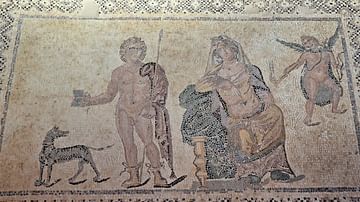
Phaedra is a princess of Crete and the wife of the Greek hero Theseus in Greek mythology. She is one of the main characters in Euripides' (c. 484-407 BCE) Greek tragedy Hippolytus, which recounts how her love for Thesesus' son Hippolytus...

Definition
The Eumenides
The Eumenides is a play written by Aeschylus (c 525 – 455 BCE), the “Father of Greek Tragedy,” the most popular and influential of all tragedians of his era. The Eumenides was the third play of a trilogy, The Oresteia, with the...

Image Gallery
A Gallery of Tutankhamun & Family
Tutankhamun is easily the most famous Egyptian ruler in the world thanks to his nearly intact tomb discovered by Howard Carter in 1922 and the "mummy's curse" associated with the opening of that tomb. Although Tutankhamun...

Article
Spiritual Defense - Execration Rituals in Ancient Egypt
Magic was an integral aspect of life in ancient Egypt. The world was created through the power of heka (magic) as Atum stood on the primordial mound of the ben-ben in the middle of the endless waters...

Definition
Akkad and the Akkadian Empire - The First Multinational Empire in the World
The city of Akkad was the seat of the Akkadian Empire (2350/2334-2154 BCE), the first multinational political entity in the world, founded by Sargon the Great, who unified Mesopotamia...

Definition
Arjuna
Arjuna (also given as Arjun) is the great hero of the Indian epic Mahabharata and the philosophical-religious dialogue Bhagavad Gita. His name means “shining”, “silver” and similar terms relating to brightness. He is the most popular...

Definition
Noah
Noah is considered one of the patriarchs in the Jewish Scriptures or one of the founding fathers of what became the religion of Judaism. His story begins in Genesis 6 and consists of three elements: the evil of the earth; the flood narrative...

Article
Egyptian Afterlife - The Field of Reeds
The ancient Egyptians believed that life on earth was only one part of an eternal journey which ended, not in death, but in everlasting joy. When one's body failed, the soul did not die with it but continued...

Article
The Ancient Celtic Pantheon
The ancient Celtic pantheon consisted of over 400 gods and goddesses who represented everything from rivers to warfare. With perhaps the exception of Lugh, the Celtic gods were not universally worshipped across Iron Age...
