
Search
Did you mean: Pulque?
Remove Ads
Advertisement
Search Results
Image
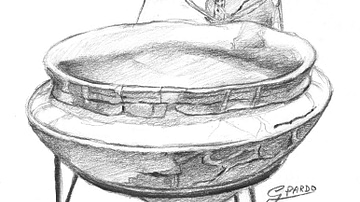
Ritual Ceramic Wash Basin (Thapsos Culture, Sicily)
Large wash basin on a high foot with bifid handle (c. 1500-c. 1200 BCE), richly decorated with geometric engravings. Thapsos Culture, Sicily. (Pencil drawing by Gina Pardo).
Image
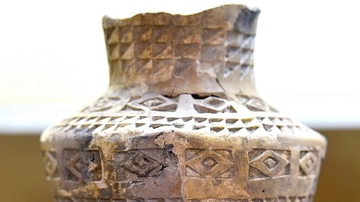
Vessel from Ninevite V Culture
This pottery vessel was found at Nineveh, Iraq. The surface is decorated with different geometric motifs and shapes. Ninevite V period/culture of Upper Mesopotamia, c. 2900-2600 BCE. On display at the Iraq Museum in...
Image
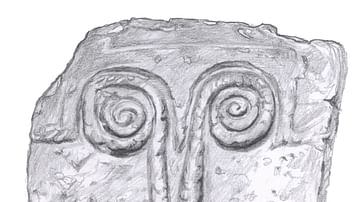
Tombstone Door (Castelluccio Culture, Sicily)
Stone door (early bronze Age, c. 2169 - c. 1500 BCE) closing of a grave dug in the rock, decorated in relief with spiral shaped motifs. On it are carved images that could allude to the sexual act and, therefore...

Image
Gandao in Kalasha culture
Gandao is the wooden image aimed at immortalizing the important departed souls of the Kalasha family member. Gandao is installed at cemetery. The Kalasha is sole pagan tribe of Pakistan with numerical strength of 4000...
Image
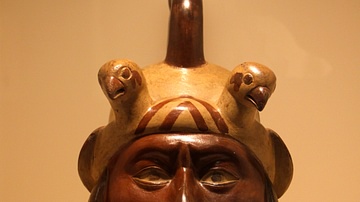
Portrait Vessel, Moche Culture
This portrait vessel was made during the Moche civilization's Apogee Epoch (c. 1 CE - 800 CE). House in Museo Larco, Lima, Peru.
Image
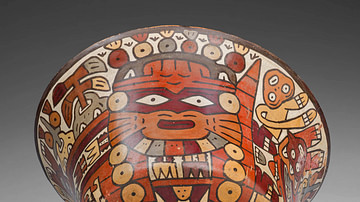
Nazca Culture Bowl
Bowl, 180 BCE / 500 CE. Nazca; south coast, Peru. The Art Institute of Chicago, Kate S. Buckingham Endowment.

Image
Stamp from Halaf Culture
A flat clay stamp with an image of its impression. This stamp dates back to the Halaf period, 5th millennium BCE, Mesopotamia, Iraq. (The Sulaimaniya Museum, Iraq).
Image
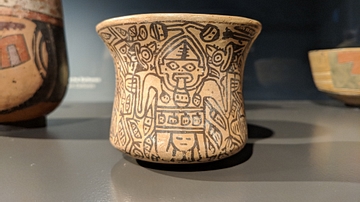
Nazca Culture Vessel
Vessel from the Nazca Civilization. Peru, 2nd to 6th century CE. Fired clay.
Exhibited at Museum Rietberg, Zurich, Switzerland.

Image
Painted Bowl from Halaf Culture
This painted bowl dates back to the Halaf period, Mesopotamia, sixth century BCE. (The Sulaimaniya Museum, Iraq).
Image
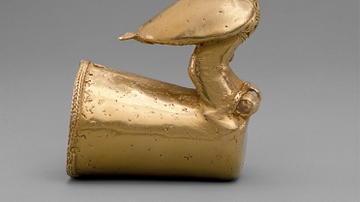
Gold Staff Finial, Zenu Culture
A gold staff finial made by the Zenúes, a people who belonged to the Zenú tribe of ancient Colombia. It features an owl on the edge with a majestic crest, polished golden wings and false filigree openwork on its chest...
