
Search
Search Results
Definition
Isthmia
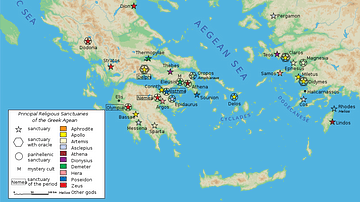
Isthmia is a genitive noun with the meaning 'of the Isthmus.' It generally refers to the site that held the famous Isthmian Games near Corinth on the Isthmus. A natural assembly place for many Greeks and travellers. Isthmia in Antiquity was...

Article
A Visitor's Guide to Oplontis, Stabiae & Boscoreale
More than 2,000 years ago, extremely wealthy Romans lived on the sunny shores of the Bay of Naples at Pompeii and in opulent villas nearby, unconcerned about Mount Vesuvius in the distance. Julius Caesar (100-44 BCE), Augustus (r. 27 BCE...

Image
The Baths of the Roman Empire - The Architecture of Daily Life
Public bathhouses (balnea and large imperial thermae) were a defining feature of urban life across the Roman Empire (27 BCE–476 CE in the West). Building on earlier bathing traditions in the Greek world, the Romans expanded the concept into...

Definition
Roman Architecture
Roman architecture continued the legacy left by Greek architects and the established architectural orders, especially the Corinthian. The Romans were also innovators and they combined new construction techniques and materials with creative...
Definition
Henry IV of England
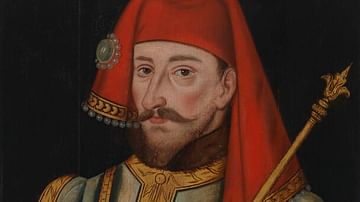
Henry IV of England ruled as king from 1399 to 1413 CE. Known as Henry Bolingbroke, Duke of Lancaster before he became king, Henry clashed with his cousin Richard II of England (r. 1377-1399 CE) and was exiled in 1397 CE. Returning to England...
Image
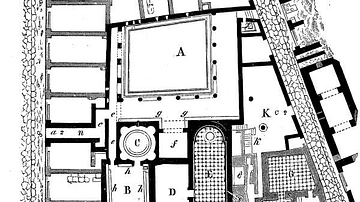
Plan of the Old Baths of Pompeii
Plan of the Old Baths at Pompeii. Legend A — atrium B — apodyterium (room for undressing) C — frigidarium (cool bath) D — tepidarium (warm room) E — caldarium (hot bath) F — thermal chamber G — women's tepidarium H — women's apodyterium...
Image
Cuicul Thermae
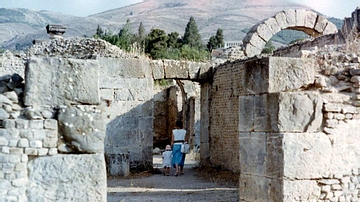
Built in 183 AD in Djemila (Roman Cuicul) during the reign of the Emperor Commodus, these thermae known as the Baths of Caracalla cover an area of 2600 m2. Different rooms: lockers (apodyterium); gym; dry oven (laconicum); humid chamber...

Article
Rome under the Julio-Claudian Dynasty
The Julio-Claudians were the first dynasty to rule the Roman Empire. After the death of the dictator-for-life Julius Caesar in 44 BCE, his adopted son Octavian - later to become known as Augustus (r. 27 BCE - 14 CE) - fought a civil war against...
Article
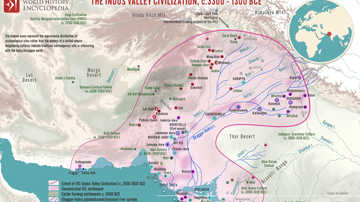
Religious Developments in Ancient India
For well over 1,000 years, sacred stories and heroic epics have made up the mythology of Hinduism. Nothing in these complex yet colourful legends is fixed and firm. Pulsing with creation, destruction, love, and war, it shifts and changes...

Definition
Medieval Hygiene
People in the Middle Ages have acquired something of a bad reputation when it comes to cleanliness, especially the peasantry. However, despite the general lack of running water and other modern amenities, there were common expectations of...
