
Search
Remove Ads
Advertisement
Search Results

Definition
Ashurbanipal
Ashurbanipal (r. 668-627 BCE, also known as Assurbanipal) was the last of the great kings of Assyria. His name means "the god Ashur is creator of an heir" and he was the son of King Esarhaddon of the Neo-Assyrian Empire. In the Hebrew Tanakh...

Article
The Literary Development of the Arthurian Legend
The Arthurian legend begins with the Welsh cleric Geoffrey of Monmouth (c. 1100 - c. 1155 CE). Earlier history writers such as Gildas, Bede, and Nennius had already established the existence of a British war-chief who defeated the Saxons...

Article
The Ancient Celtic Pantheon
The ancient Celtic pantheon consisted of over 400 gods and goddesses who represented everything from rivers to warfare. With perhaps the exception of Lugh, the Celtic gods were not universally worshipped across Iron Age Europe but were very...

Definition
Ninurta
Ninurta (identified with Ningirsu, Pabilsag, and the biblical Nimrod) is the Sumerian and Akkadian hero-god of war, hunting, and the south wind. He first appears in texts in the early 3rd millennium BCE as an agricultural god and local deity...

Definition
Sargonid Dynasty
The Sargonid Dynasty was the last ruling house of the Neo-Assyrian Empire from 722-612 BCE, beginning with the reign of Sargon II and ending with fall of the Neo-Assyrian Empire. Some of the most famous kings in the history of Assyria come...

Article
Five Key Historical Sites of the Hittites
Although mentioned several times in the Biblical texts, the actual existence of the Hittites was largely forgotten until the late 19th century CE. With the discovery of Hattusa in 1834 CE, the city that was for many years the capital of the...

Definition
Phoenicia
Phoenicia was an ancient civilization composed of independent city-states located along the coast of the Mediterranean Sea stretching through what is now Syria, Lebanon and northern Israel. The Phoenicians were a great maritime people, known...
Definition
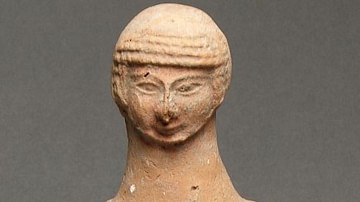
Asherah
Asherah is a Hebrew word for what was either a goddess or a cultic object or perhaps both. Although many see evidence for Asherah being an individual goddess known to the Israelites, some scholars believe that the context of the word primarily...
Definition
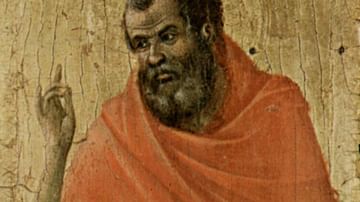
Hosea
Hosea is listed as the first of the twelve minor prophets in the Hebrew Bible. He was active in the 8th century BCE and his ministry extended over 60 years, from King Jeroboam II (787-747 BCE) to King Hoseah (731-722 BCE). He was one of the...
Article
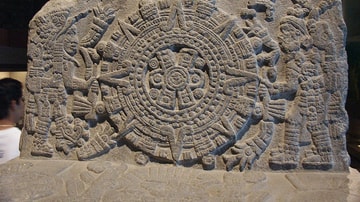
The Aztec New Fire Ceremony
The New Fire Ceremony, also known as the Binding of the Years Ceremony, was a ritual held every 52 years in the month of November on the completion of a full cycle of the Aztec solar year (xiuhmopilli). The purpose of it was none other than...
