
Search
Remove Ads
Advertisement
Search Results
Image
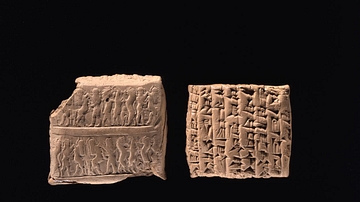
Murashu Tablets
Tablet B5304, Murashu Archive. Contract for the supply of dates, written in Akkadian with a summary in Aramaic.

Image
Proto-Elamite Tablets
The so-called proto-Elamite script is still undeciphered. The influence of contemporary Mesopotamian writing and sealing is clear, however. From Susa, Iran. Circa 3000-2800 BCE. Lent by the Musee de Louvre. It is currently housed in the British...
Definition
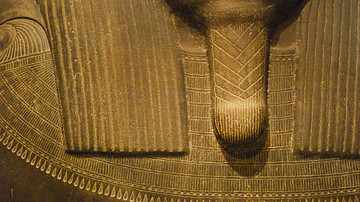
Phoenician Government
The governments of such Phoenician cities as Tyre, Sidon, and Byblos were led by hereditary monarchs throughout their history. Those individual cities typically acted autonomously from each other and only rarely did they form mutual alliances...

Article
Scribes in Ancient Mesopotamia - The Beginning of History
Scribes in ancient Mesopotamia were highly educated individuals trained in writing and reading on diverse subjects. Initially, their purpose was to record financial transactions through trade, but in time, they were integral to every aspect...
Definition
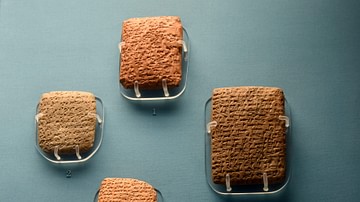
Amarna Letters
The Amarna Letters are a body of 14th-century BCE correspondence exchanged between the rulers of the Ancient Near East and Egypt. They are perhaps the earliest examples of international diplomacy while their most common subjects are negotiations...

Definition
Phoenician Religion
The Phoenician Religion, as in many other ancient cultures, was an inseparable part of everyday life. Gods such as Baal, Astarte, and Melqart had temples built in their name, offerings and sacrifices were regularly made to them, royalty performed...

Article
The Mesopotamian Pantheon - The Ancient Gods and Goddesses of the Near East
The gods of the Mesopotamian region were not uniform in name, power, provenance or status in the hierarchy. Mesopotamian culture varied from region to region and, because of this, Marduk should not be regarded as King of the Gods in the same...

Article
Ashurbanipal's Collection of Sumerian and Babylonian Proverbs
Ashurbanipal's collection of Sumerian and Babylonian proverbs formed part of the famous Library of Ashurbanipal (7th century BCE) established at Nineveh for the express purpose of preserving the knowledge of the past for future generations...
Article
A Supervisor's Advice to a Young Scribe
A Supervisor's Advice to a Young Scribe is a Sumerian composition relating a dialogue between an elder scribe and a young graduate from his school. The piece is dated to the Old Babylonian Period (c. 2000-1600 BCE) and, although originally...

Definition
Cuneiform - The Writing System That Made History
Cuneiform is a system of writing first developed by the ancient Sumerians of Mesopotamia circa 3600/3500 BCE. It is considered the most significant among the many cultural contributions of the Sumerians and the greatest among those of the...
