
Search
Did you mean: Ancient India?
Remove Ads
Advertisement
Search Results

Definition
Ancient Indian Warfare
War was the chief means by which territory was annexed or rulers defeated in ancient India, which was divided into multiple kingdoms, republics and empires. Often one empire predominated or different empires co-existed. The Vedic literature...
Article
Elephants In Ancient Indian Warfare
Elephants were used in the ancient Indian army, irrespective of regions, dynasties, or points in time; their importance was never denied and continued well into the medieval period as well. The ready availability in the subcontinent of the...

Article
Chariots in Ancient Indian Warfare
The chariot was the elite arm of ancient Indian armies in the Vedic (1500 BCE – 1000 BCE) and Epic periods (described by the Ramayana and the Mahabharata, 1000-600 BCE) because of the advantages it conferred and the selection of plain ground...

Definition
Indian Princely States
The Indian Princely states (aka Native States or Princely India) were those states in the Indian subcontinent the British did not conquer but which were typically bound by treaty first to the East India Company and then to the British Crown...

Image
Ancient Indian Ship
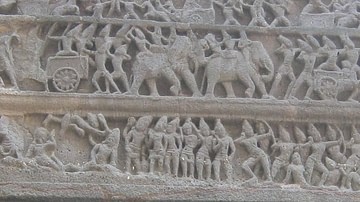
This relief depicts an ancient Indian ship likely to have been used by Indian adventurers sailing to Java, Indonesia.
Location: Borobudur temple, Magelang, Central Java, Indonesia
Image
Ancient Indian Ship
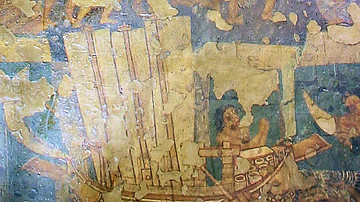
This Ajanta mural depicts an ancient Indian ship with high stem and stern and three oblong sails attached to three masts. Steering-oars can also be seen.
Location: Cave No. 2, Ajanta Caves, Aurangabad District, Maharashtra state, India
Image
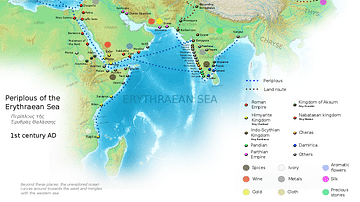
Ancient Indian Maritime Trade Routes
This map is derived from the book Periplus of the Erythraean Sea. It depicts trade routes in the ancient world, ports in the Chera territory and other parts of India and the trade routes connecting them to other parts of the world along with...

Article
Indian Ocean Trade before the European Conquest
Finding a maritime route to the East and gaining access to the lucrative spice trade stood at the root of the European Age of Exploration. However, when Vasco da Gama rounded the Cape of Good Hope and reached the Indian Ocean in 1493, he...

Article
Eyes on the East: Chronicles of the Indian Ocean Spice Trade
As the 15th century ended, Europeans were still mostly in the dark about the Eastern world. Early travelers like Marco Polo had given the West tidbits of information, but these accounts were too highly colored and fragmentary to provide a...
Article
Buffalo and Eagle Wing & The American Indian Boarding School
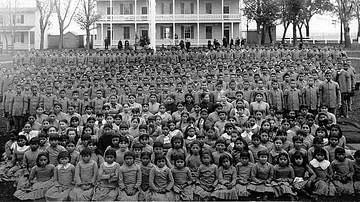
Buffalo and Eagle Wing is a legend of the Plains Indians culture of North America, which is part origin myth and part cautionary tale on the importance of keeping one's promises. Although scholars agree on the general provenance of the tale...
