
Search
Remove Ads
Advertisement
Search Results

Definition
Pushyabhuti Dynasty
The Pushyabhuti Dynasty (c. 500 CE - 647 CE) rose after the downfall of the Gupta Empire (3rd century CE - 6th century CE) in the 6th century CE in northern India. Also known as the Vardhana or Pushpabhuti Dynasty, the core...

Article
The History Of Chess - A 1500-year-old Strategy Game
The game of chess has a particularly long and fascinating history of more than 1500 years. Over the centuries, there have also been hundreds of different chess variants, all of which incorporate the...

Article
Cultural Links between India & the Greco-Roman World
Cyrus the Great (558-530 BCE) built the first universal empire, stretching from Greece to the Indus River. This was the famous Achaemenid Empire of Persia. An inscription at Naqsh-i-Rustam, the tomb...
Image
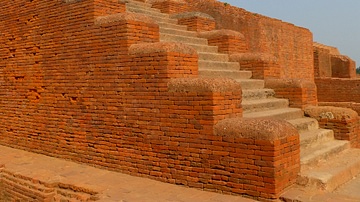
Stairway, Nalanda
Nalanda was one of the oldest universities of the world and a revered center of learning. It was located in Magadha, modern day Bihar, India and was operational between c. 300-1200 CE. It received patronage from the Gupta Empire...
Article
Etymology of the Name India
The name of India is a corruption of the word Sindhu. Neighbouring Arabs, Iranians uttered's' as 'h' and called this land Hindu. Greeks pronounced this name as Indus. Sindhu is the name of the Indus River, mentioned...
