
Search
Remove Ads
Advertisement
Search Results

Article
6 Key Instruments of the Scientific Revolution
The Scientific Revolution (1500-1700) was driven by several key inventions, all scientific instruments that became essential to achieving a greater understanding of the world around us. With instruments...

Article
The Textile Industry in the British Industrial Revolution
During the Industrial Revolution (1760-1840), textile production was transformed from a cottage industry to a highly mechanised one where workers were present only to make sure the carding, spinning...

Definition
Ancient Timekeeping
The passage of time has always been a preoccupation of human beings, whether it be a question of satisfying basic needs such as when to eat and sleep, the importance of seasons for migratory and agricultural purposes or a more...

Article
Chester: A Time-Travelling City
It is said that Chester is the richest city in Britain in terms of archaeological and architectural treasures. One of the finest strategic outposts of the Roman Empire, it is one of the few walled cities left in Britain...
Definition
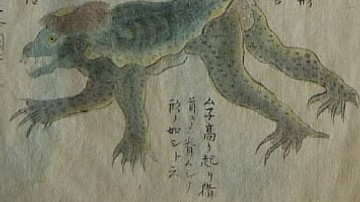
Kappa
A kappa is a Japanese mythological water sprite or, literally, "river child" (河童). One of the more popularly known yōkai (Japanese mythological creature) in Japan, kappa are generally green or yellow, have a tortoise-like shell on their...
Image
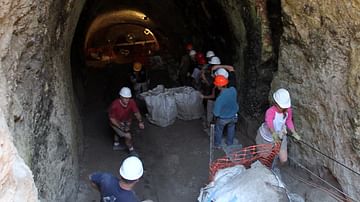
Gezer Water System (Under Excavation)
The entrance to the water system at Tel Gezer in central Israel. This photo was taken during the 2011 excavations of the water system by the New Orleans Baptist Theological Seminary. The water system is believed...

Video
Water and Classical Civilizations: Crash Course World History 222
In which John Green teaches you about water! So, we talk about resources a lot on Crash Course, and today is no exception. It turns out people can't live without water, which means it's...
Article
Tower of the Winds
The Tower of the Winds, also known as the Clock of Andronicus Cyrrhestes, is a timekeeping tower on the eastern side of the Roman agora of Athens. Built in the 2nd century BCE, it once had nine sundials and contained a large...

Definition
Chinampas - Mexico's Human-Made Agricultural Islands
Chinampas are human-made islands built in shallow lakebeds that have fed the people of Mesoamerica and shaped local ecosystems for over a thousand years. Sometimes referred to as 'floating gardens,'...

Definition
Anaximenes
Anaximenes of Miletus (l. c. 546 BCE) was a younger contemporary of Anaximander and generally regarded as his student. Known as the Third Philosopher of the Milesian School after Thales (l. c. 585 BCE) and Anaximander (l. c. 610 -...
