
Search
Did you mean: Viking Art?
Remove Ads
Advertisement
Search Results

Definition
Paul Revere
Paul Revere (1735-1818) was an American silversmith born in the British colony of Massachusetts. He was an active member of the Sons of Liberty during the American Revolution (c. 1765-1789) and became a folk hero for his midnight...

Definition
Cicero
Marcus Tullius Cicero was a Roman orator, statesman, and writer. He was born on 3 January 106 BCE at either Arpinum or Sora, 70 miles south-east of Rome, in the Volscian mountains. His father was an affluent eques, and the family was...

Definition
Aaron Burr
Aaron Burr (1756-1836) was an American politician and lawyer, who served as the third vice president of the United States (1801-1805). His reputation as a US Founding Father was marred by his killing of political rival Alexander Hamilton...

Definition
Zarathustra
Zarathustra (also given as Zoroaster, Zartosht, Zarathustra Spitama, l. c. 1500-1000 BCE) was the Persian priest-turned-prophet who founded the religion of Zoroastrianism (also given as Mazdayasna “devotion to Mazda”), the first monotheistic...
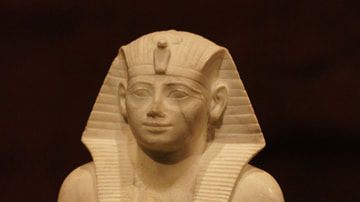
Definition
Thutmose III
Thutmose III (also known as Tuthmosis III, r. 1458-1425 BCE) was the 6th king of Egypt's 18th Dynasty, one of the greatest military leaders in antiquity, and among the most effective and impressive monarchs in Egypt's history. His...

Image
Ancient Mesopotamia from Cities to Empires
The long-term development of Mesopotamia traces one of the earliest and most influential trajectories in world history, spanning from small Stone Age settlements (c. 10,000 BCE) to the political and cultural...

Image
Map of the Hittite Empire 16th-13th Century BCE - Anatolian Great Power of the Bronze Age
The Hittite Empire emerged in central Anatolia during the early second millennium BCE and developed into one of the major powers of the Late Bronze Age. Centered on Hattusa...

Article
Child Labour in the British Industrial Revolution
Children were widely used as labour in factories, mines, and agriculture during the British Industrial Revolution (1760-1840). Very often working the same 12-hour shifts that adults did, children as...

Article
Harald Bluetooth & the Conversion of Denmark
In Scandinavia, Christianity spread due to the support and encouragement of political rulers at the top of the society above all else. Conversion, defined here as the actions taken by kings or clerics to...

Article
Interview with Gordon Campbell
In this interview, World History Encyclopedia talks to author and scholar Gordon Campbell all about his new book Norse America: The Story of a Founding Myth published by Oxford University Press. Kelly (WHE): Thanks...
