
Search
Remove Ads
Advertisement
Search Results

Definition
Han Dynasty
The Han Dynasty (202 BCE - 220 CE) was the second dynasty of Imperial China (the era of centralized, dynastic government, 221 BCE - 1912 CE) which established the paradigm for all succeeding dynasties up through 1912 CE. It succeeded...

Definition
Dutch East India Company
The Dutch East India Company (VOC) was formed in 1602 by the Staten-Generaal (States General) of the then Republic of the Seven United Netherlands. The company was granted a 21-year charter with rights to trade exclusively...

Definition
Tang Dynasty
The Tang Dynasty (618-907 CE) was one of the greatest in Imperial Chinese history. It was a golden age of reform and cultural advancement which lay the foundation for policies which are still observed in China today. The second emperor...

Definition
Yuan Dynasty
The Yuan Dynasty was established by the Mongols and ruled China from 1271 to 1368. Their first emperor was Kublai Khan (r. 1260-1294) who finally defeated the Song Dynasty which had reigned in China since 960. Stability and peace...

Definition
Qilin (Chinese Unicorn)
The qilin (麒麟, or simply lin 麟) is a Chinese mythical creature, frequently translated as "Chinese unicorn." While this term may suggest a one-horned creature, the qilin is often depicted with two horns. However, like the...
Article
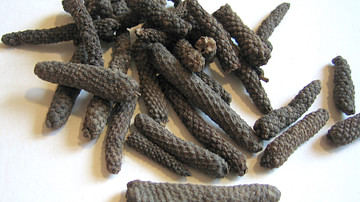
Middle Eastern Power Shifts & the Trade of Pepper from East to West
Pepper has long been the king of spices and for almost 2,000 years dominated world trade. Originating in India, it was known in Greece by the 4th century BCE and was an integral part of...

Interview
Interview: Buddhism in Korea
In this interview, James Blake Wiener, Co-Founder and Communications Director at Ancient History Encyclopedia (AHE), speaks to Emeritus Professor James H. Grayson, Professor of Korean Studies at the University of Sheffield...
Image
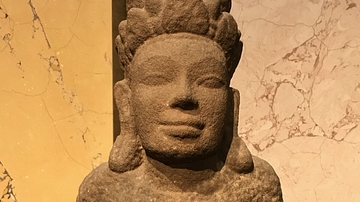
Apsara from Champa
This lovely apsara comes from the city of My Son in what now present-day Vietnam. It was created while the region was ruled by the kingdom of Champa. It is made of sandstone and dates from the 10th century CE. (Museum Rietberg...
Image
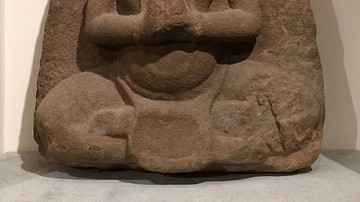
Brahman Worshipper
A limestone Brahman worshipper from Thu Thien, Bnh Djnh province, Vietnam. 13th-14th century CE. (Musée Guimet, Paris)

Image
Japanese Troops Enter French Indochina, 1940
Japanese troops enter French Indochina and head towards Lang Son in what is northern Vietnam today. During 1940, Japan began to encroach on French Indochina so that they could cut off the supplies that were...
