
Search
Remove Ads
Advertisement
Search Results

Definition
William II of England
William II of England, sometimes called William 'Rufus' for his red hair and complexion, reigned as the king of England from 1087 to 1100 CE. The son of William the Conqueror (r. 1066-1087 CE), the younger William was loyal...

Definition
William the Conqueror
William the Conqueror (c. 1027-1087), also known as William, Duke of Normandy, led the Norman Conquest of England in 1066 when he defeated and killed his rival Harold Godwinson at the Battle of Hastings. Crowned King William...

Definition
Sir William Marshal - England's Greatest Knight
The Englishman Sir William Marshal (c. 1146-1219 CE, aka William the Marshal), Earl of Pembroke, is one of the most celebrated knights of the Middle Ages. Renowned for his fighting skills, he remained undefeated...

Definition
Constantine V
Constantine V, also known as Constantine the Dung-named by his enemies, was emperor of the Byzantine empire from 741 to 775 CE. He enjoyed military successes in the Middle East and Balkans but his reign is chiefly remembered for...

Definition
Theophilos
Theophilos was emperor of the Byzantine Empire from 829 to 842 CE. He was the second ruler of the Amorion dynasty founded by his father Michael II. Popular during his reign and responsible for a lavish rebuilding of Constantinople's...

Image
Yazdegerd III
Coin of Yazdegerd III (r. 632-651 CE).

Article
Gods & Goddesses of Ancient Egypt - A Brief History
The land of ancient Egypt was alive with the spirit of the gods. The sun god Ra broke from the darkness every morning in his great boat, bringing the light, and many of the gods watched over the people...
Article
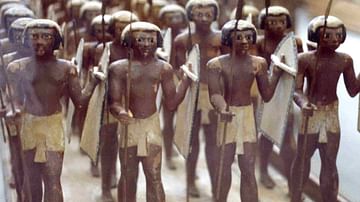
Weapons in Ancient Egypt
The ancient Egyptian military is often imagined in modern films and other media as a heavily armed and disciplined fighting force equipped with powerful weapons. This depiction, however, is only true of the Egyptian army...

Article
Mesopotamian Effects on Israel During the Iron Age
The Iron Age in the traditional Ancient Near Eastern chronology ranges from somewhere around 1200 BCE to 333 BCE. It begins from the era when it was first thought iron came to be used up to the ascendency...
Article
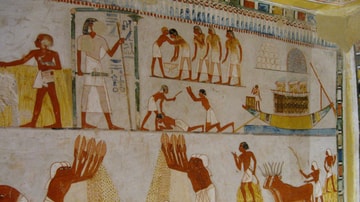
Social Structure in Ancient Egypt
The society of ancient Egypt was strictly divided into a hierarchy with the king at the top and then his vizier, the members of his court, priests and scribes, regional governors (eventually called 'nomarchs'), the...
