
Search
Remove Ads
Advertisement
Search Results

Image
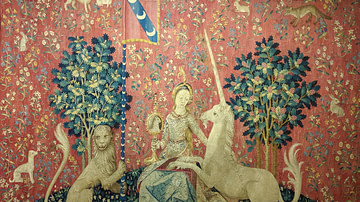
The Lady and the Unicorn: Taste
The Lady and the Unicorn are six tapestries depicting a medieval lady in various poses. Each scene depicts one of the five senses; the sixth scene is labelled À Mon Seul Désir ("to my only desire") whose meaning is...
Image
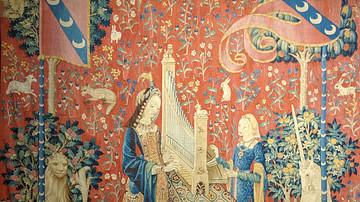
The Lady and the Unicorn: Sight
The Lady and the Unicorn are six tapestries depicting a medieval lady in various poses. Each scene depicts one of the five senses; the sixth scene is labelled À Mon Seul Désir ("to my only desire") whose meaning is...
Image
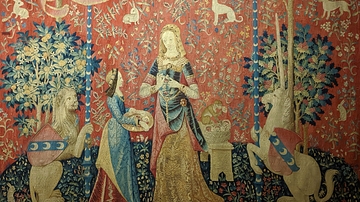
The Lady and the Unicorn: Hearing
The Lady and the Unicorn are six tapestries depicting a medieval lady in various poses. Each scene depicts one of the five senses; the sixth scene is labelled À Mon Seul Désir ("to my only desire") whose meaning...
Image
The Lady and the Unicorn: Smell
The Lady and the Unicorn are six tapestries depicting a medieval lady in various poses. Each scene depicts one of the five senses; the sixth scene is labelled À Mon Seul Désir ("to my only desire") whose meaning is...

Image
Headdress and Necklaces from the Royal Cemetery of Ur
An elaborate headdress and necklace made of gold, lapis lazuli, and carnelian which belonged to a high-level Sumerian woman. These were found in the "Great Death-Pit", one of the graves in the Royal...
Image
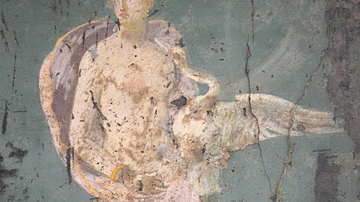
Leda and the Swan Fresco from Stabiae
Roman fresco depicting Leda and the Swan. From Villa Arianna at Stabiae. Naples National Archaeological Museum. 1st century CE.
Article
Fashion & Dress in Ancient Mesopotamia - From Basic to Accessorized in the Ancient World
Fashion and dress in Mesopotamia – clothing, footwear, and accessories – were not only functional but defined one's social status and developed from a simple loincloth in...

Article
The Household Staff in an English Medieval Castle
An English medieval castle, if a large one, could have a household staff of at least 50 people, which included all manner of specialised and skilled workers such as cooks, grooms, carpenters, masons...

Article
Siege Warfare in Medieval Europe
Siege tactics were a crucial part of medieval warfare, especially from the 11th century CE when castles became more widespread in Europe and sieges outnumbered pitched battles. Castles and fortified cities offered...

Article
William the Conqueror's Harrying of the North
By the end of 1066 CE William the Conqueror had won a decisive victory at the Battle of Hastings, subdued the south-east of England and been crowned King William I in Westminster Abbey but there remained...
